A Christmas Carol
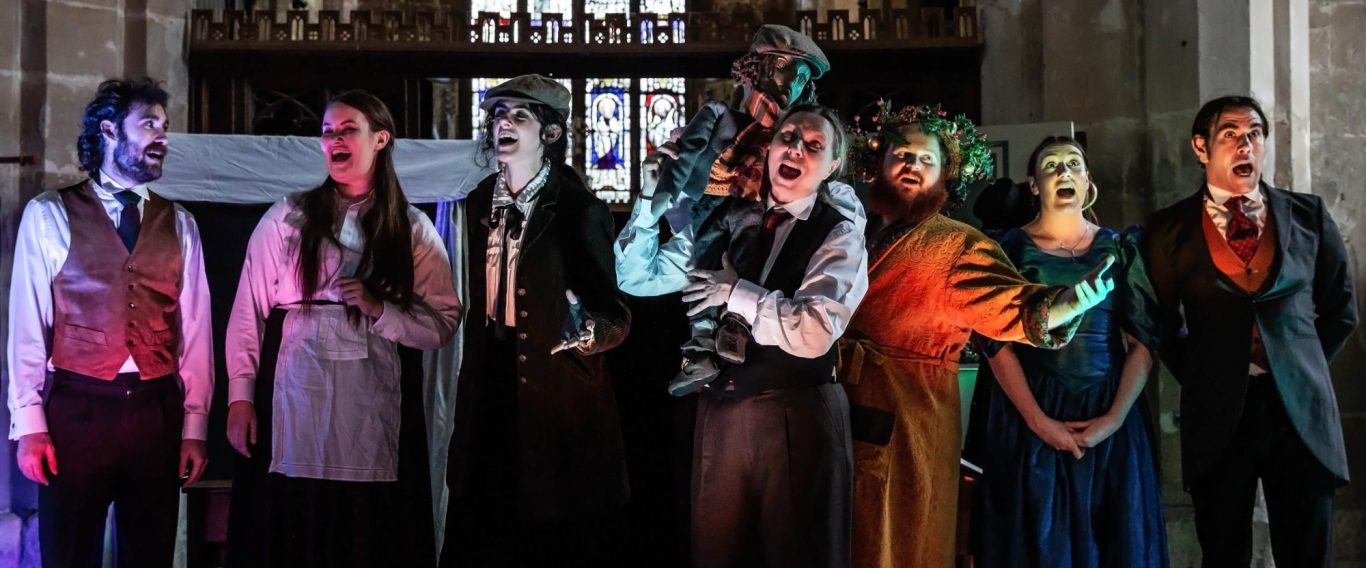
I adapted, directed, and produced A Christmas Carol, reimagining Charles Dickens’ enduring masterpiece as a visceral, atmospheric theatrical experience. The production unfolded not only in traditional theatre spaces, but within the shadowed walls of St Mary de Crypt—a site steeped in history and believed to be the final resting place of the man who inspired Ebenezer Scrooge.
Set against the echoes of the past, the performance blurred the line between story and origin, transforming a familiar tale into something hauntingly immediate. This fusion of place, history, and storytelling created a deeply immersive encounter, where audience and narrative were bound together in a shared, unforgettable experience.
Staging
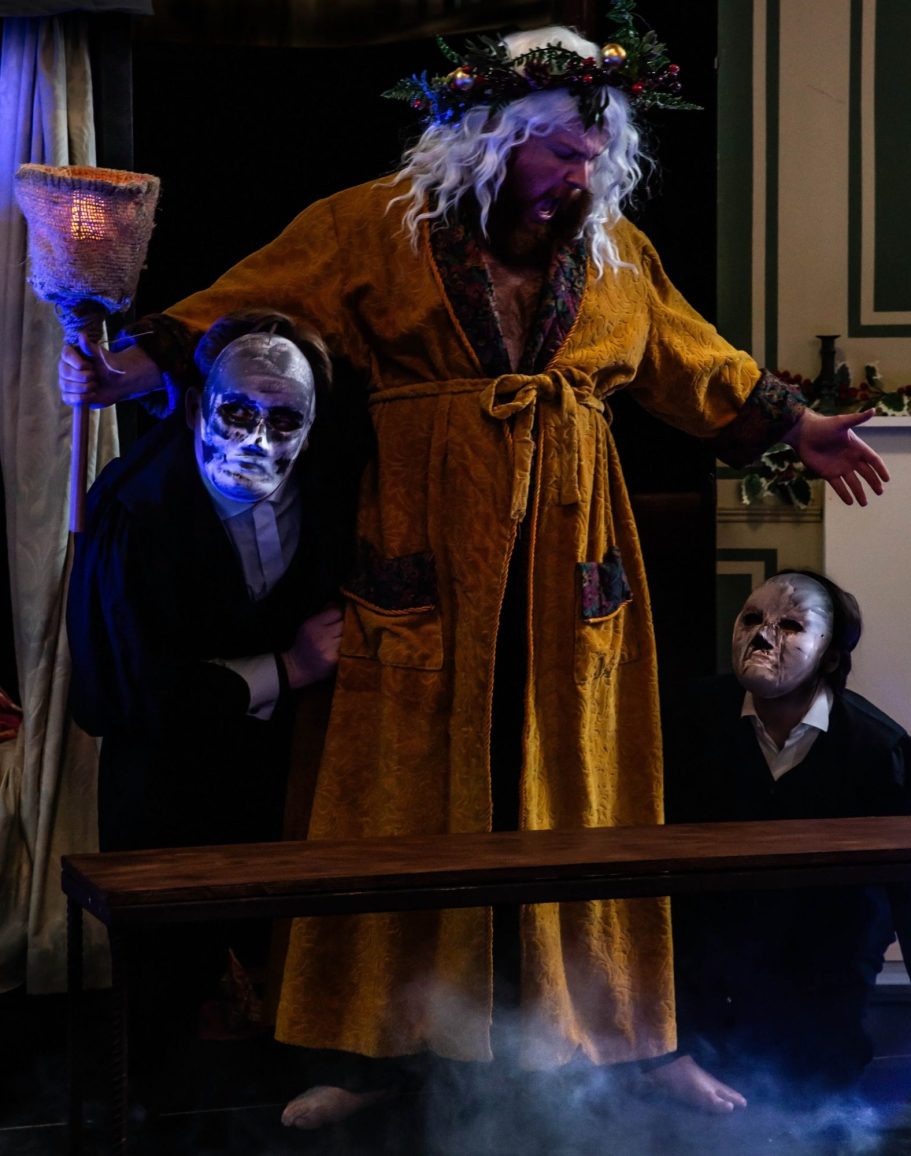
Staging the production presented a series of creative and logistical challenges, particularly in the fluid transitions required once the spirits begin guiding Ebenezer Scrooge through the pivotal moments of his life. As the narrative demanded rapid shifts across time and place, I developed an intricate, actor-driven choreography of scene changes, embedding transformation into the movement of the performers themselves.
Rather than relying on traditional pauses, transitions were integrated seamlessly into the action. Subtle set pieces were carried, reconfigured, and revealed in motion, while scene changes were rehearsed with the same precision and intention as the dramatic scenes. For larger transformations, the action expanded into the audience space, redirecting focus and sustaining narrative momentum while the stage evolved in parallel.
This approach delivered multiple creative benefits: it maintained an unbroken emotional rhythm, heightened audience immersion, and reinforced the storytelling through physicality and ensemble collaboration. The visible mechanics of change became part of the theatrical language, drawing the audience deeper into the world rather than pulling them out of it.
Combined with evocative lighting design and powerful performances, the result was a production that felt fluid, cinematic, and deeply atmospheric—transporting audiences through time and space with a sense of wonder and immediacy.
Costumes and Puppets
Costumes
As director, I led the design collaboration for A Christmas Carol, embedding costume, puppetry, and mask work into the core of the storytelling. I established a cohesive visual language that balanced period authenticity with character-driven detail, ensuring design choices revealed narrative and emotional shifts.
I made key creative decisions, including portraying Tiny Tim as a puppet and differentiating supernatural figures through a blend of live performance and puppetry, creating a clear visual distinction between worlds.
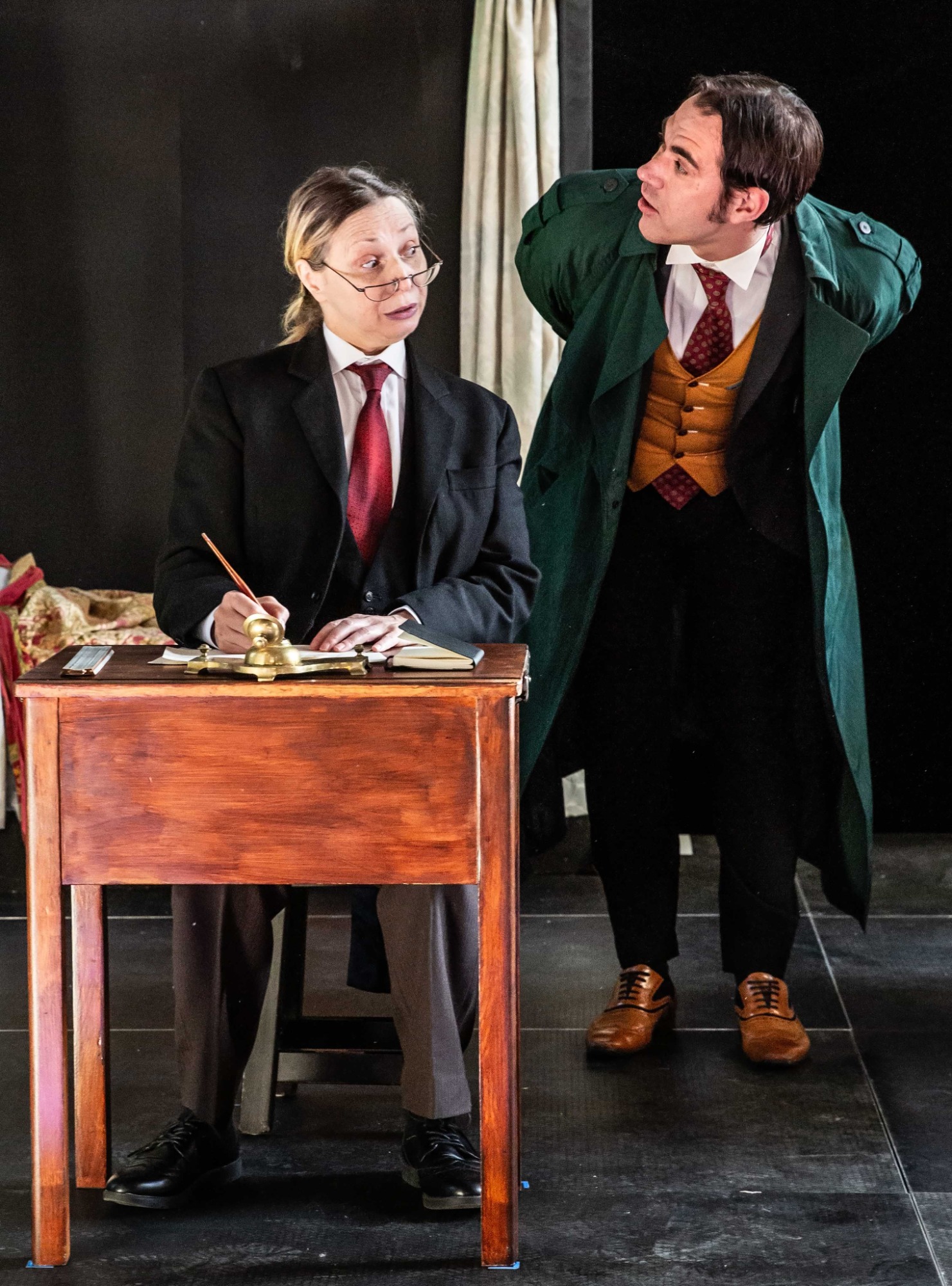
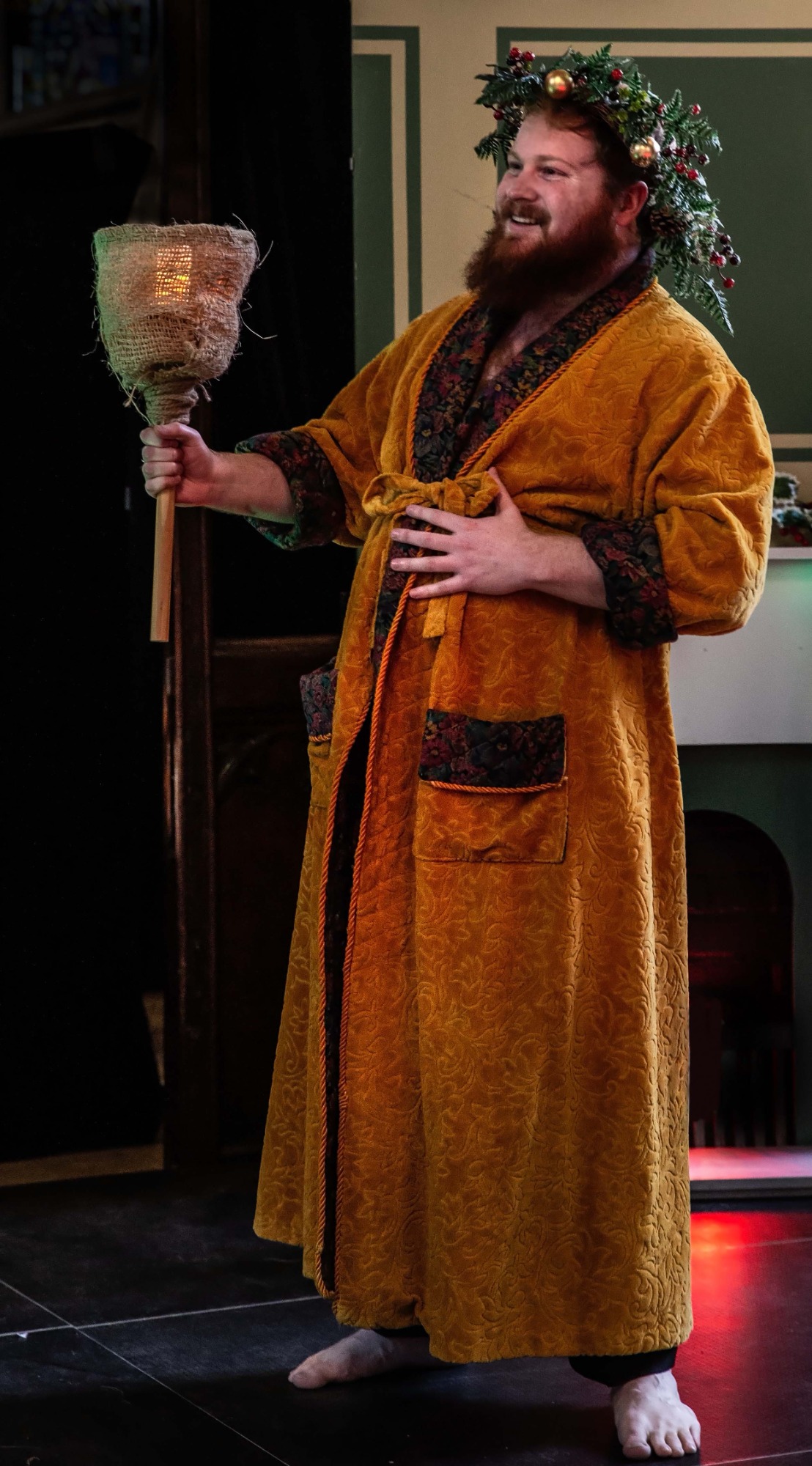
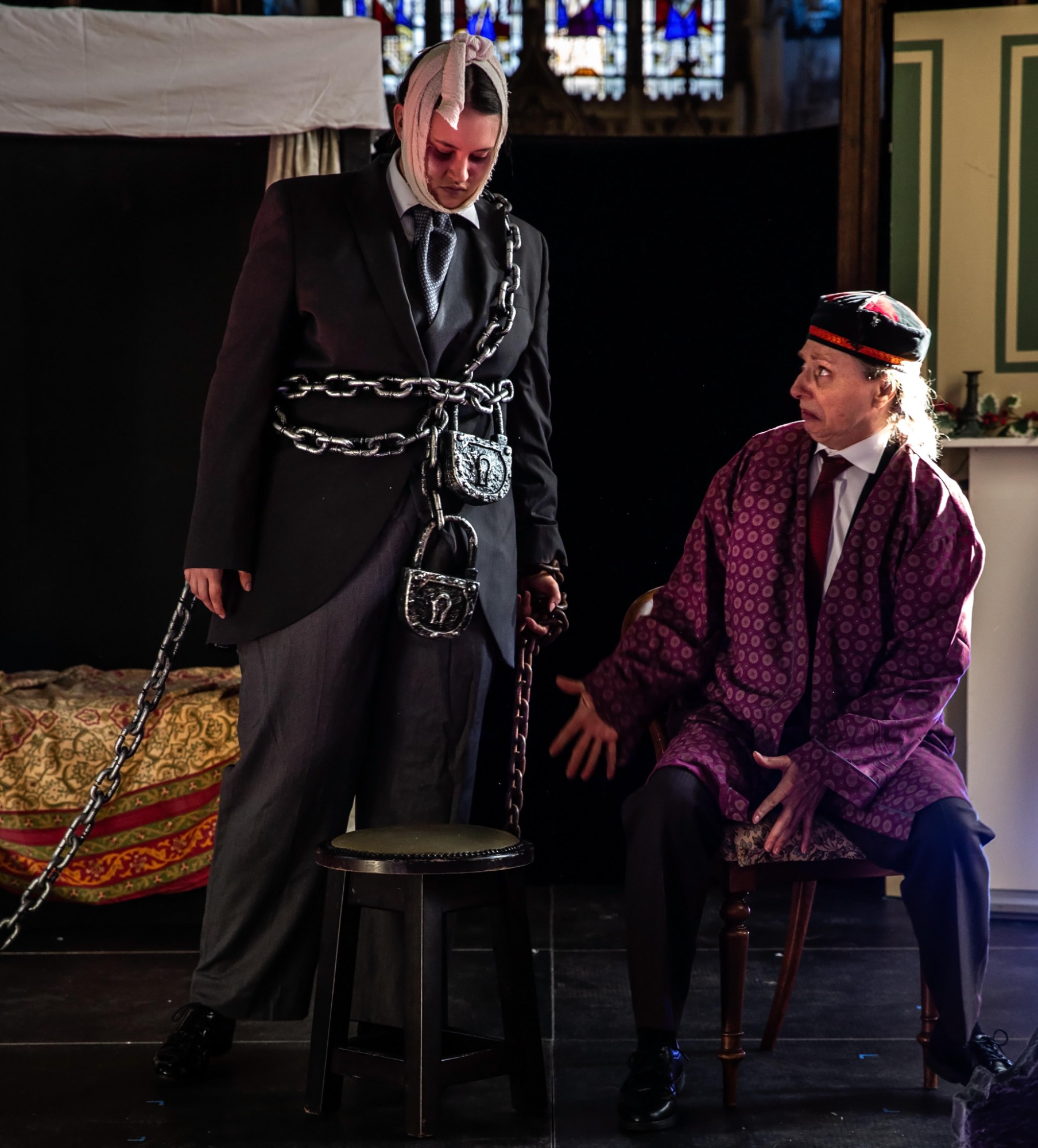
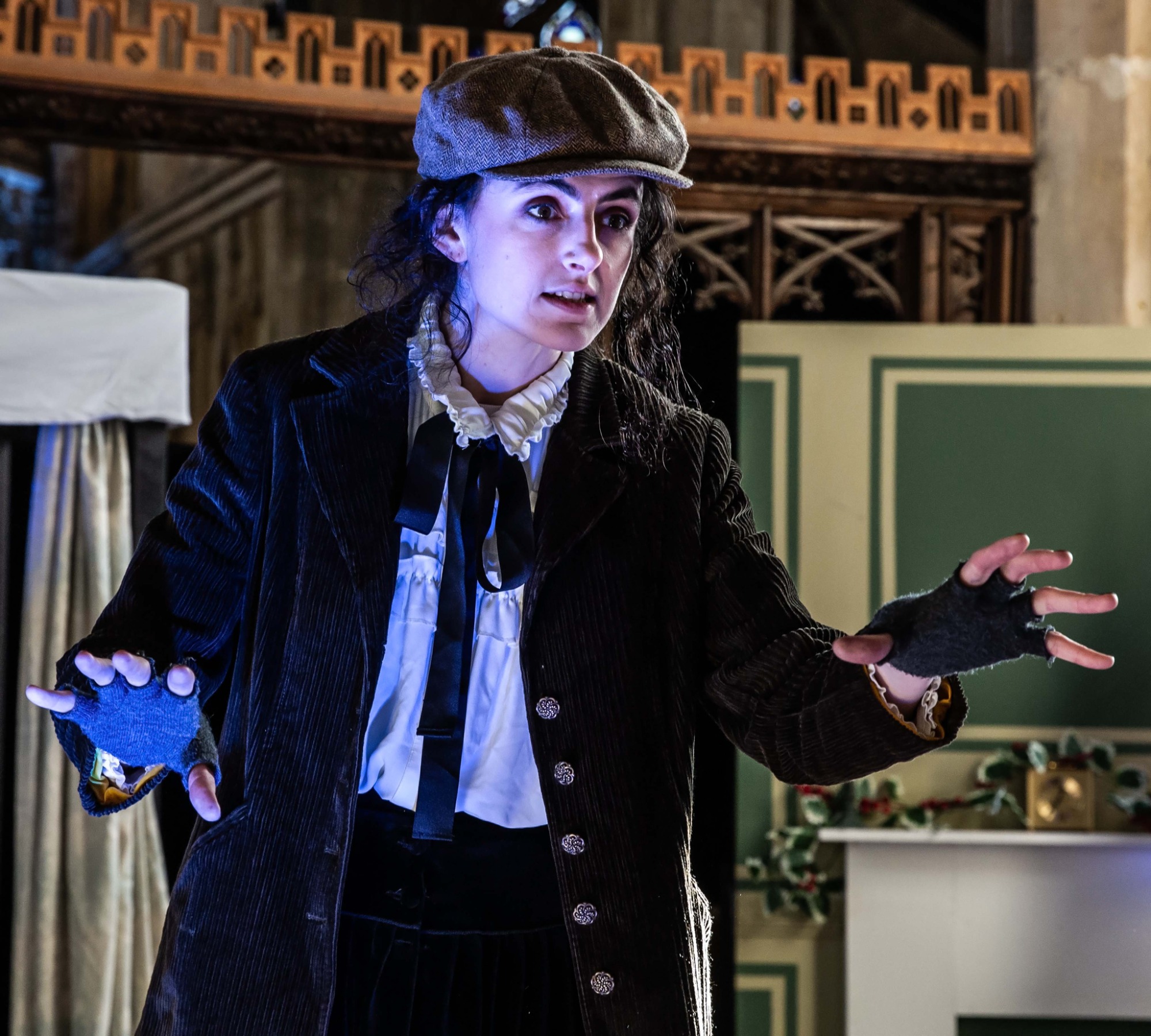
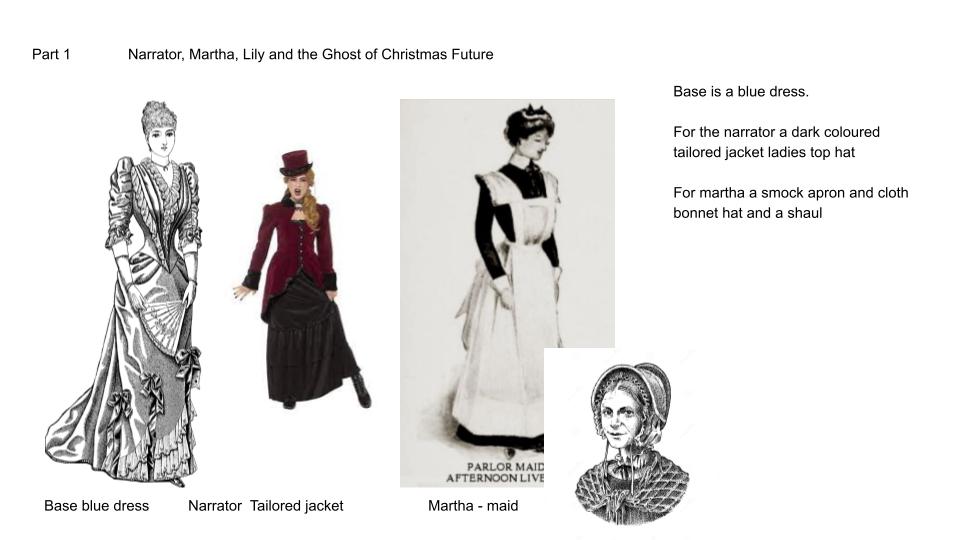
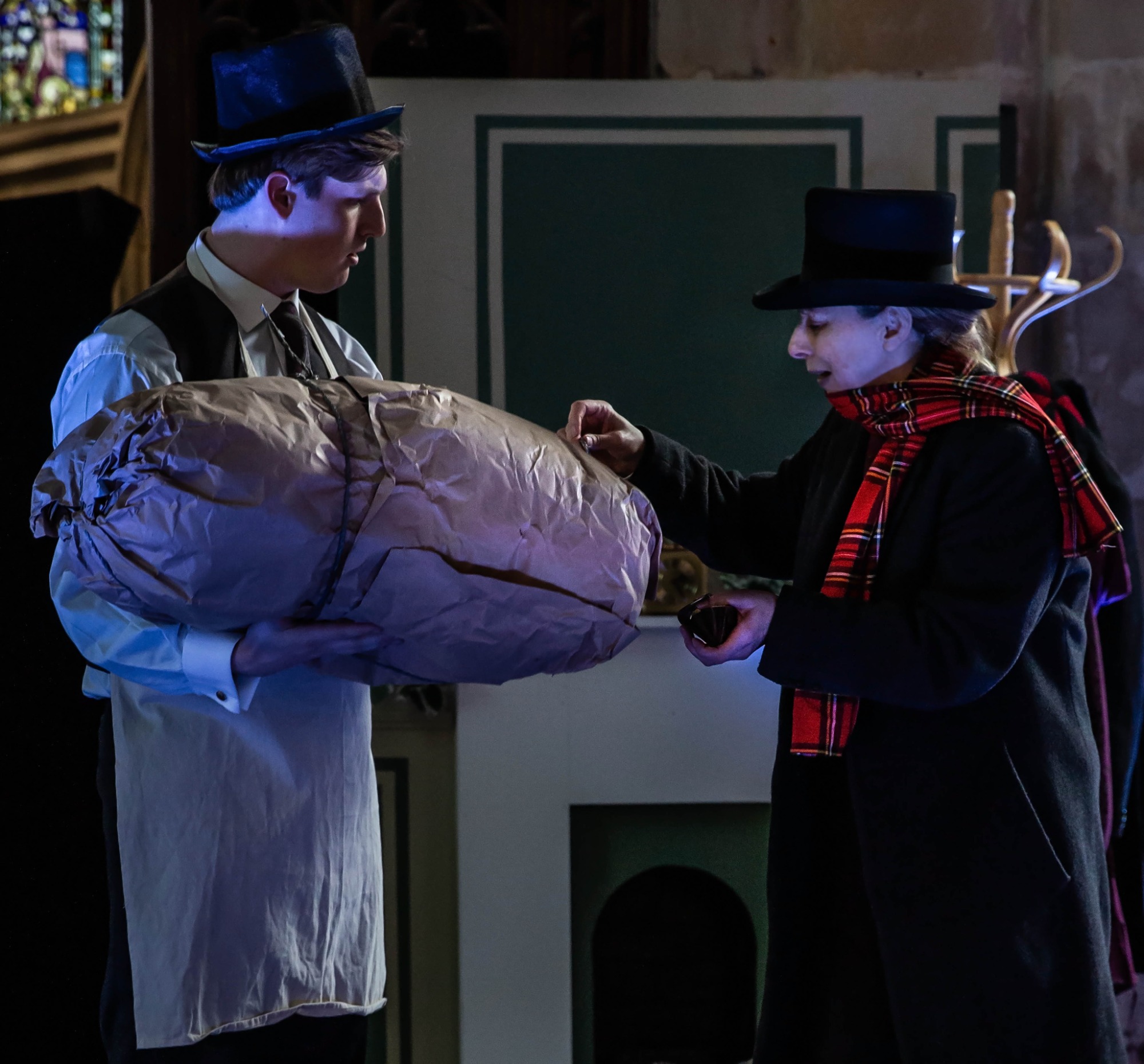
This design-led approach resulted in a unified, visually striking production that enhanced storytelling, solved practical challenges, and demonstrated strong interdisciplinary leadership.
Ghost of Christmas Past
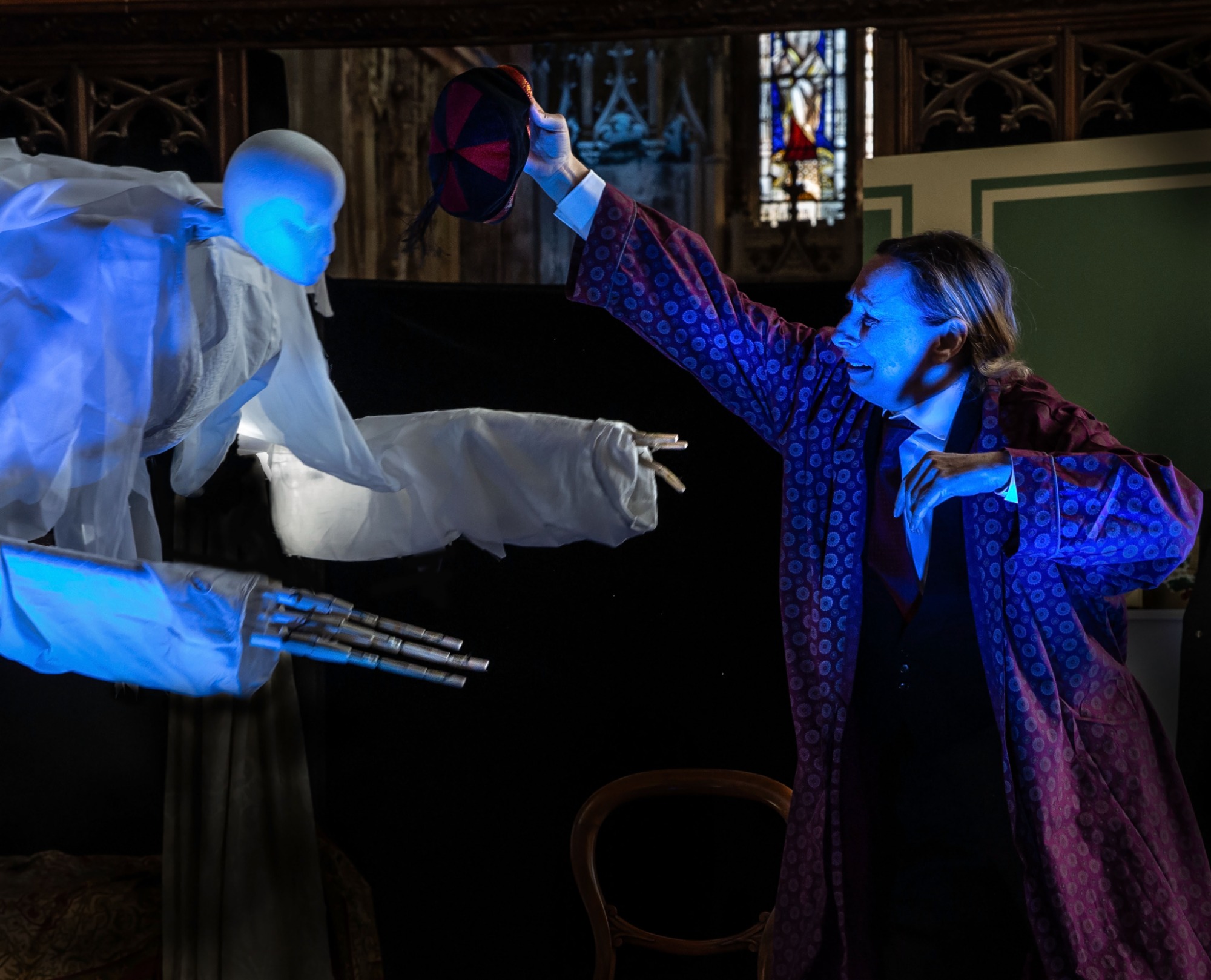
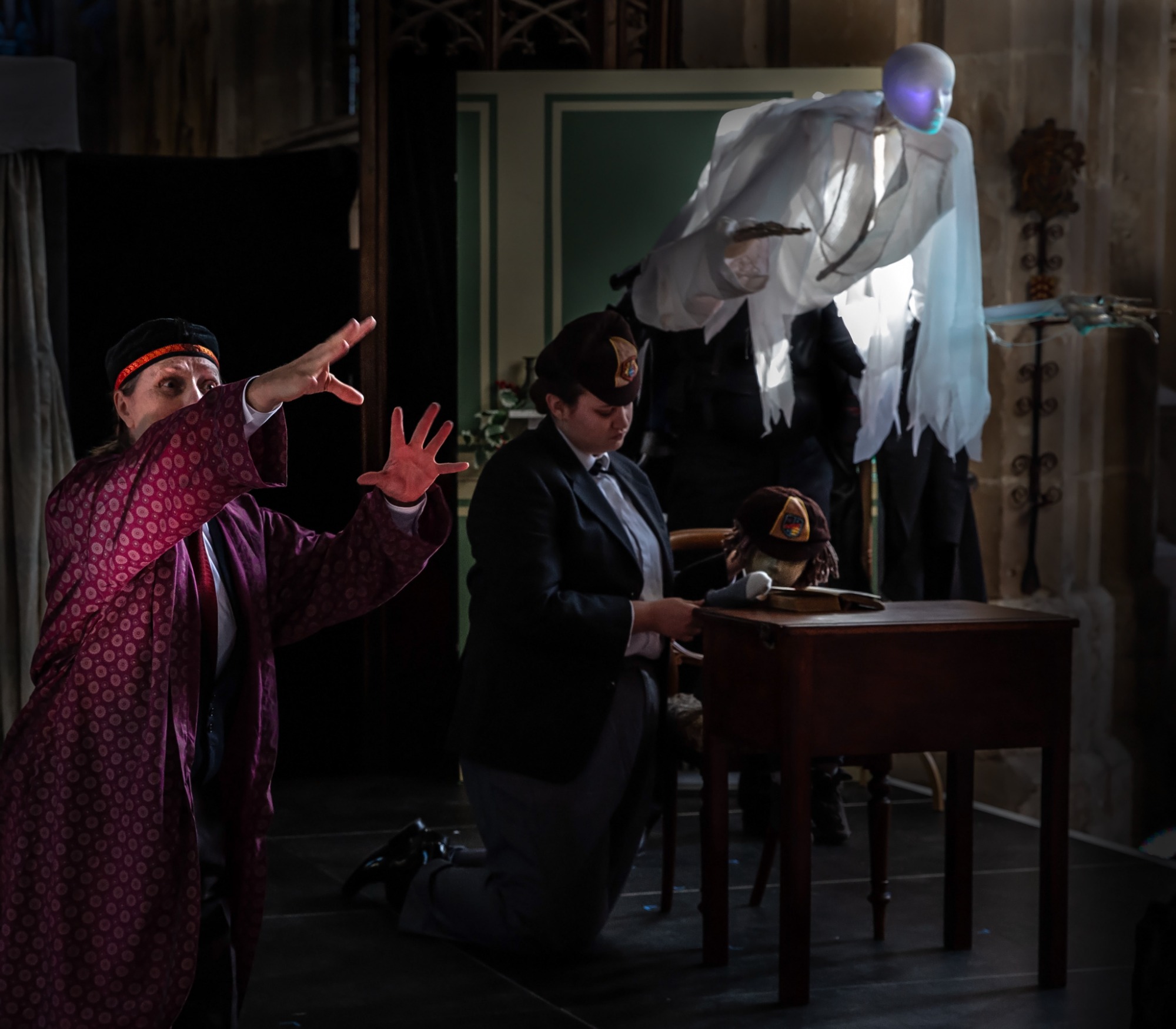
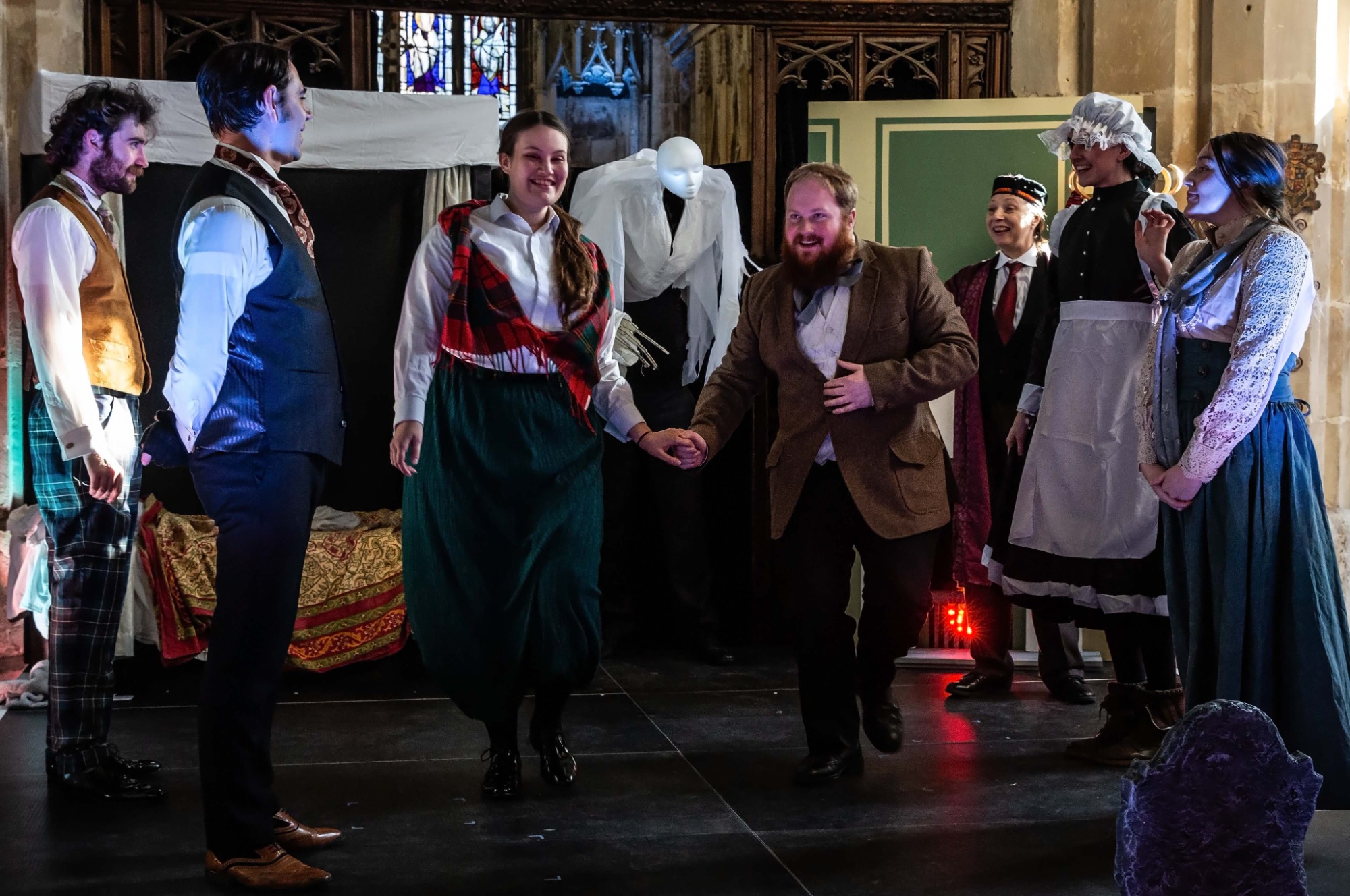
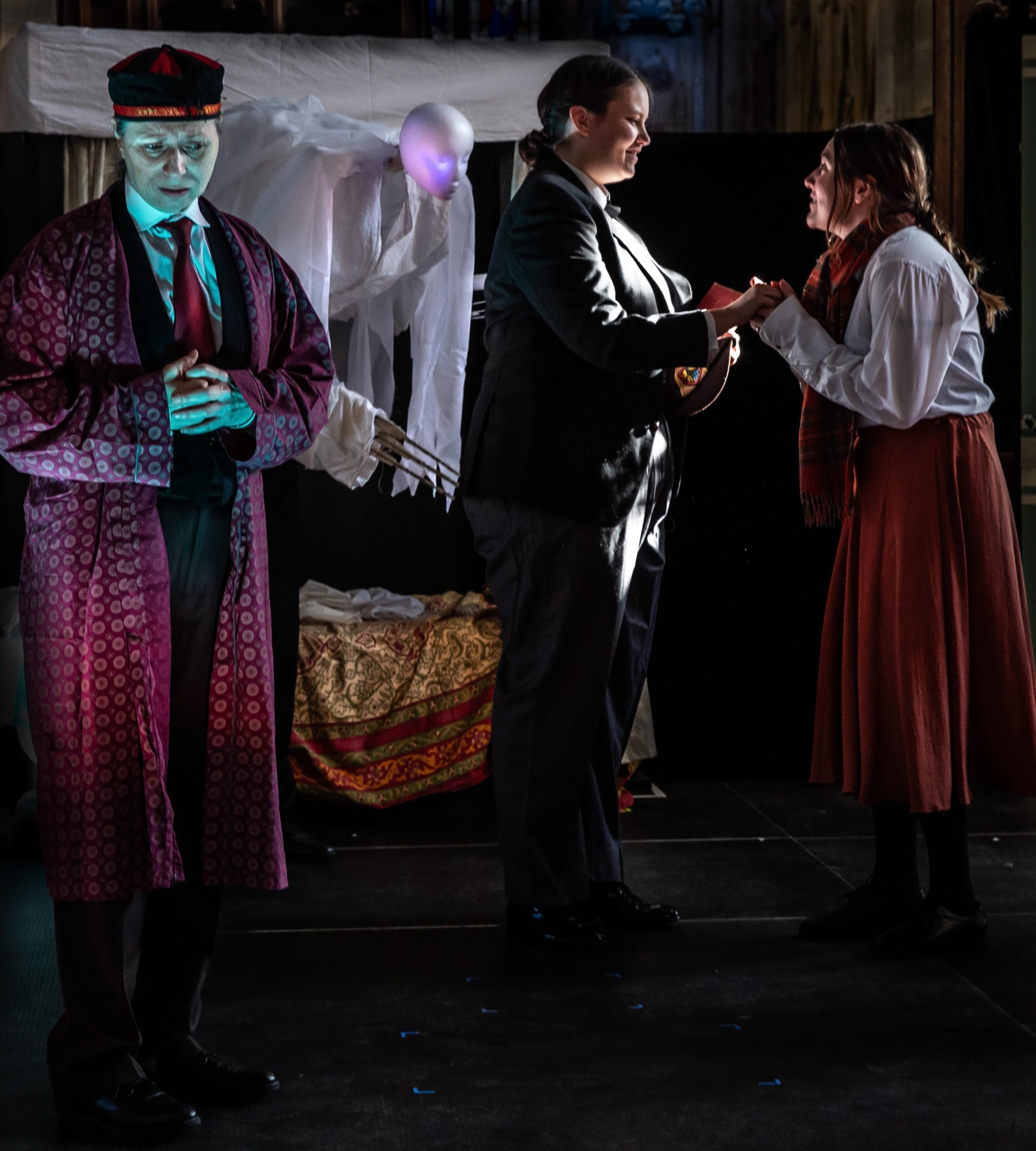
For the Ghost of Christmas Past, I needed to create the illusion of weightlessness—of a spirit unbound by time or gravity, able to drift, hover, and vanish at will. I designed a puppet built onto the back of the operator, extending forward so that it appeared to float independently in space. Its arms were controlled with rods, while elongated fingers were articulated individually, allowing for delicate, expressive movement.
This design created a striking visual separation between performer and figure, giving the impression that the spirit existed just beyond the physical world. As it glided above and through the action, swooping in and out of scenes, it carried an ethereal, almost dreamlike quality. The fluidity of motion, combined with the unnatural extension of its limbs, made the Ghost feel both graceful and uncanny—at once inviting and unsettling.
The effect was transformative: the audience experienced the spirit not as a character bound to the stage, but as a presence moving through memory itself, guiding the narrative with a sense of inevitability and quiet otherworldly power.
Tiny TIm
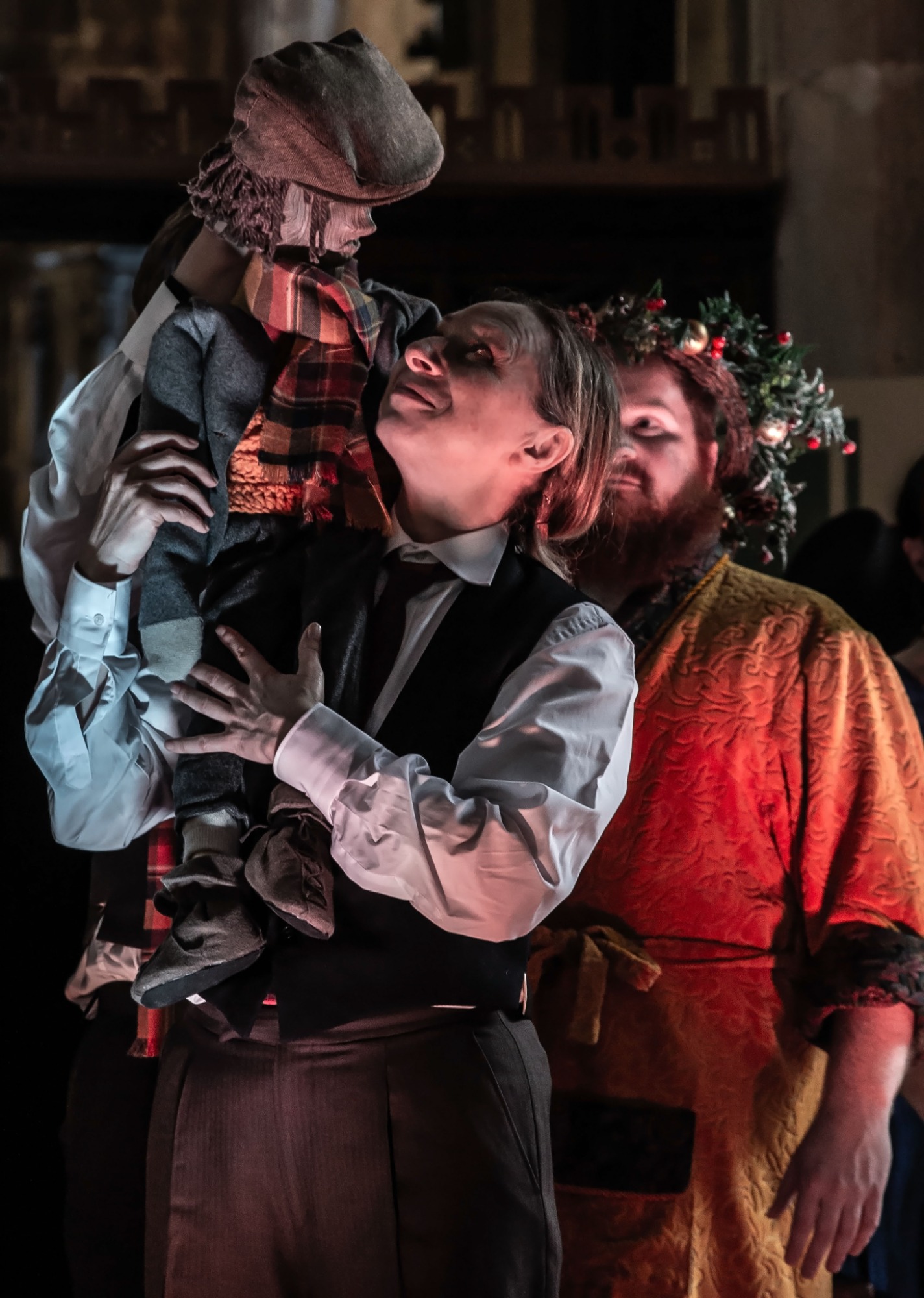
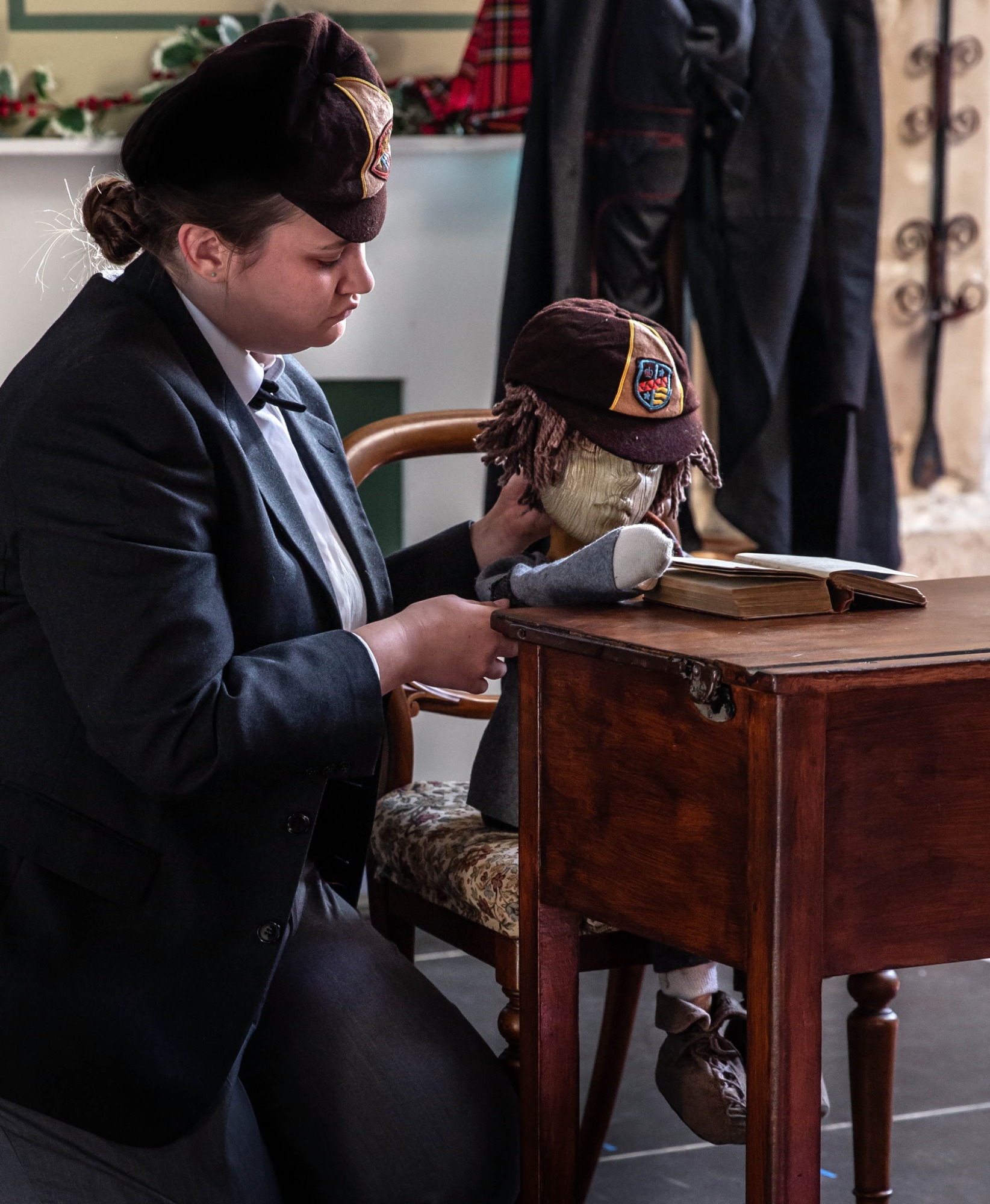
I chose to realise Tiny Tim as a Bunraku-style puppet, operated by one or two performers, to capture a profound sense of delicacy and care. Cradled almost constantly in the arms of his family, his very form invited tenderness—each movement shaped through touch, support, and shared breath. This choice heightened his fragility and innocence, transforming him into a living symbol of love, hope, and precarity within the Cratchit household.
The visible act of holding and guiding him deepened the audience’s emotional connection, making his presence feel both intimate and heartbreakingly vulnerable. In this way, design and performance combined to create a quietly powerful embodiment of the stakes at the heart of the story.
Ghost of Christmas Future
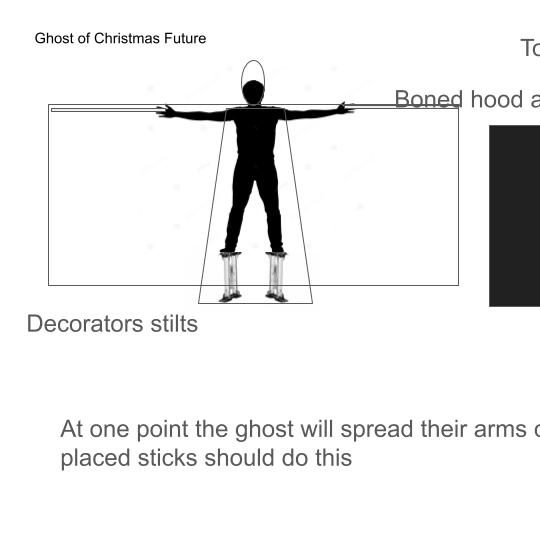
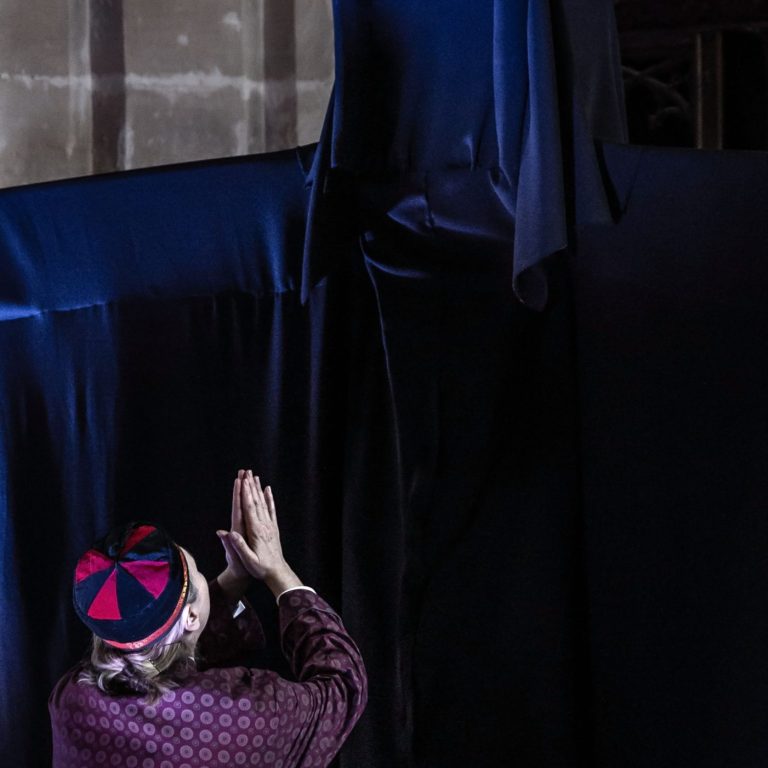
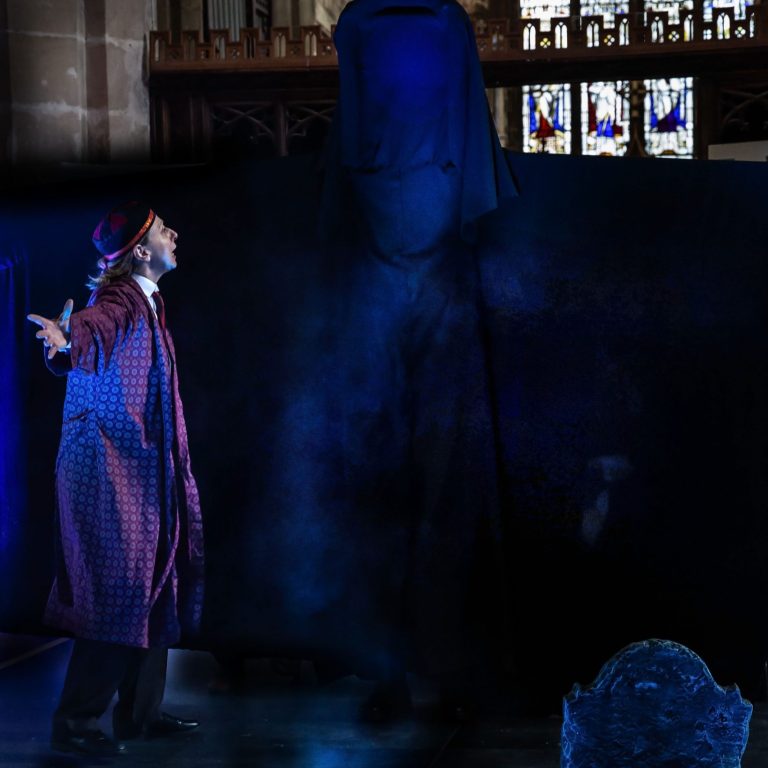
For the Ghost of Christmas Yet to Come, I wanted to create an overwhelming, dominant presence—something that would command the stage and embody the inevitability of fate. The puppet was designed to sit on the operator’s shoulders, rising to over eight feet tall with an expansive wingspan of more than twelve feet.
This scale allowed the figure to physically eclipse the stage, its vast silhouette looming over both actors and audience. Crucially, its size also enabled entire scene transitions to take place concealed behind it, as the Ghost advanced slowly and deliberately across the space.
The effect was both practical and deeply theatrical: while the narrative continued uninterrupted, the audience’s focus was drawn to the imposing, silent figure, heightening tension and anticipation. Its sheer presence created a sense of dread and finality—transforming the stage into a space overshadowed by the future itself, where change could happen unseen, and escape felt impossible.
Music
As the production was staged during the Christmas season, I integrated carols as a central storytelling device, using music to underscore key emotional and narrative moments within A Christmas Carol. Each piece was carefully selected and positioned to reflect shifts in time, memory, and tone.
I used the Sans Day Carol as a recurring motif, its gentle, nostalgic quality acting as a musical thread that returned Ebenezer Scrooge to his childhood. In contrast, lively, communal moments were underscored with carols such as Deck the Halls, sung by the cast to create warmth, celebration, and a sense of shared joy.
For the final, haunting vision, I worked with the musical director to develop an ominous arrangement of Carol of the Bells. Sung by the full ensemble as they gathered around Scrooge at his own graveside, the piece transformed from festive familiarity into something dark and foreboding.
This musical approach created a powerful emotional architecture: carols became more than accompaniment—they functioned as memory, contrast, and foreshadowing. The audience was guided through shifting atmospheres of nostalgia, joy, and dread, with music acting as a bridge between the human and supernatural worlds, deepening immersion and amplifying the production’s emotional impact.