Macbeth
I adapted, produced, designed, and directed a theatrical production of Macbeth, aimed primarily at a GCSE audience (approximately 70%). The intention was to create a professional and engaging performance that supported students’ understanding while preserving the impact of Macbeth in a live theatre context.
My adaptation retained the full original text; however, it was streamlined through staging rather than cuts. To maintain pace and clarity, I eliminated blackouts entirely. Scene changes occurred fluidly in full view of the audience, either integrated into ongoing action or staged simultaneously in different parts of the performance space, including the auditorium. This approach sustained momentum, reduced disruption, and helped students follow the narrative without losing engagement.
The adaptation retained the full original text, but was streamlined through staging rather than cuts. To maintain pace and clarity, I removed all blackouts. Scene transitions took place in full view of the audience, either integrated into ongoing action or staged simultaneously in different areas of the performance space, including the auditorium. This created a continuous flow, reduced disruption, and helped sustain audience engagement.
As producer, I managed the overall delivery of the project, coordinating rehearsals and logistics to ensure a professional standard suitable for theatre performance. I worked to unify the creative and technical elements around the central aim of accessibility for a student audience.
As designer, I developed a visual concept that supported fluid staging and clear storytelling. The set enabled seamless transitions, while lighting and costume choices reinforced shifts in mood, character, and location in a way that was easy for younger audiences to follow.
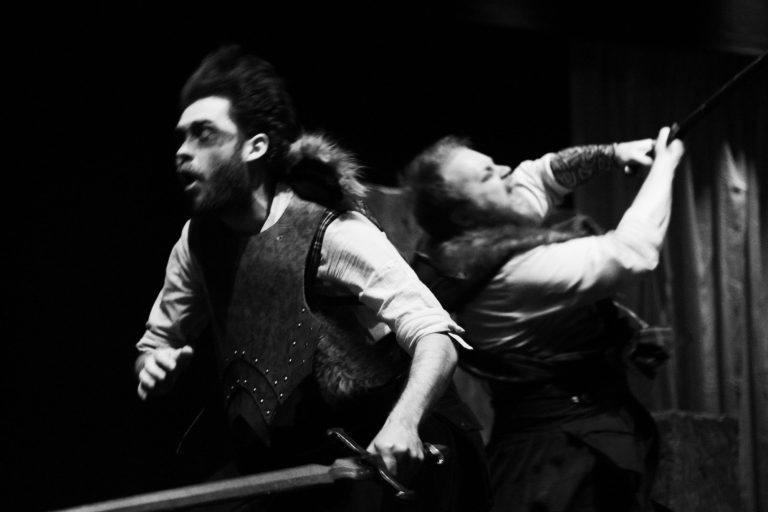
As director, I focused on clarity of language and strong physical storytelling. Performances were shaped to be dynamic and emotionally engaging, ensuring that meaning was communicated effectively to audiences less familiar with Shakespearean text.
The final production successfully balanced educational clarity with theatrical impact, resulting in an engaging and accessible interpretation for GCSE students.
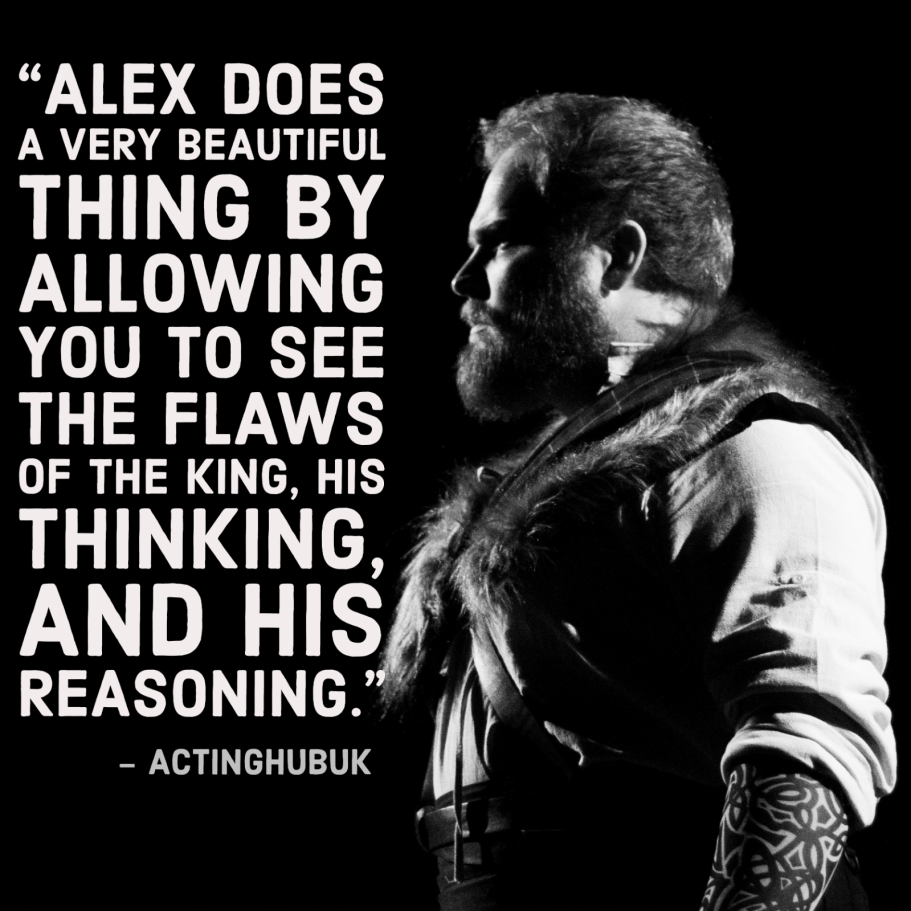
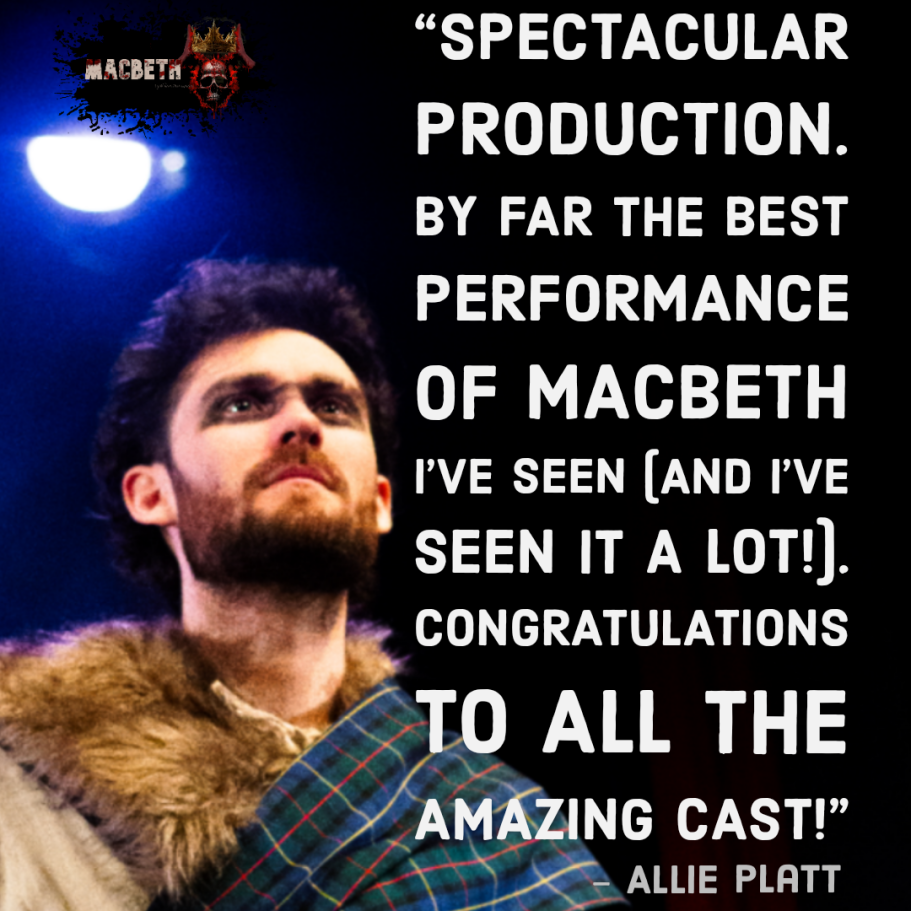
Adaptation
My adaptation of Macbeth retained the full original text, but was streamlined through staging to improve clarity and pace for a GCSE audience. Rather than cutting material, I removed traditional blackouts, allowing scenes to transition fluidly in full view of the audience. Action often overlapped, with moments staged simultaneously across different areas of the stage and auditorium. This approach maintained narrative momentum and helped sustain engagement, ensuring students could follow the story more easily. By combining fidelity to the text with dynamic staging, the adaptation balanced educational value with a more immediate and immersive theatrical experience.
Setting
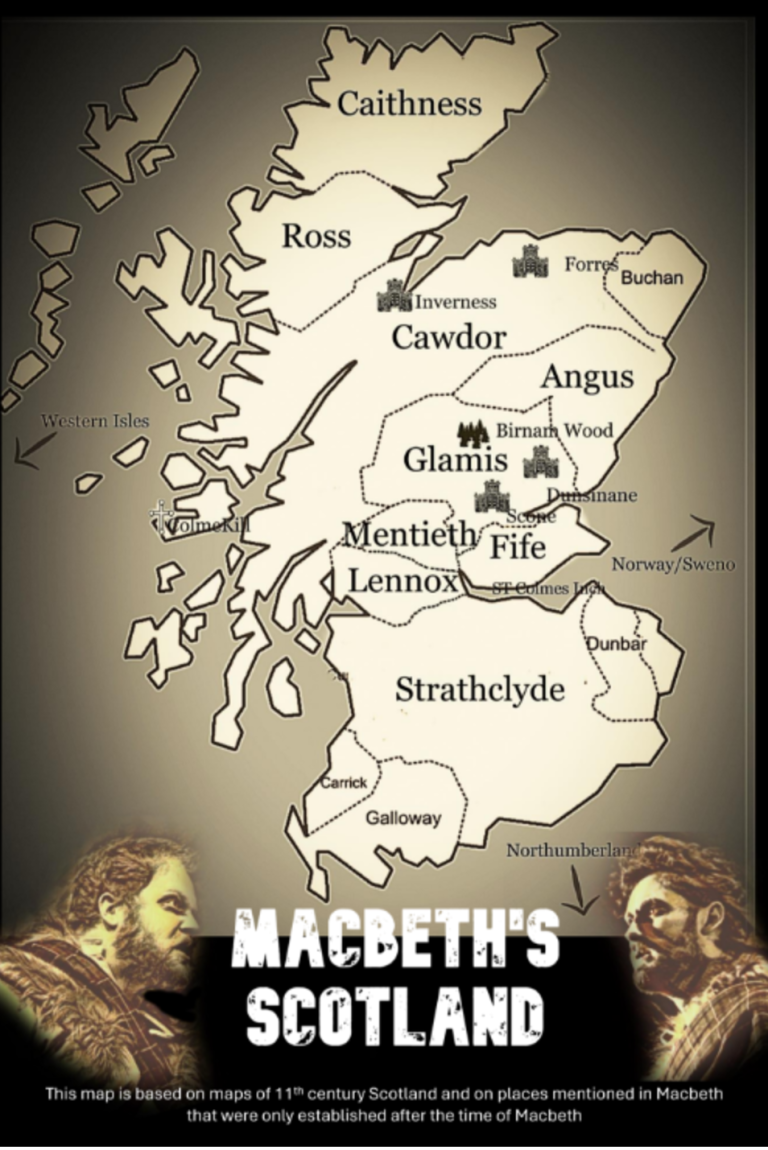
One of the strengths of William Shakespeare’s work is its universality, allowing Macbeth to be set in any period. I chose to place this production in its historical Scottish context to deepen the exploration of its mystical elements, particularly the supernatural. This setting created a strong visual and thematic contrast between the openness of the Highlands and the darkness of winter nights, reflecting the play’s psychological descent. It also enabled dynamic sword combat and supported a cohesive mise-en-scène, where costume, setting, and staging combined to create an immersive and atmospheric theatrical world.
Staging
The staging for this touring production of Macbeth is deliberately minimal, flexible, and symbolic, allowing it to be performed in small- to medium-sized theatres, schools, and non-conventional venues. The set is quick to assemble, easy to transport, and suitable for spaces with limited technical facilities. There are no traditional backdrops except two simple cloths, removing the need for full-stage blackouts. Scene transitions happen in view of the audience, maintaining momentum and tension. This continuous action reflects the play’s fast pace, mirroring Macbeth’s psychological unravelling and the relentless consequences of his ambition.
Three-Zone Staging (Paul Avery’s Model)
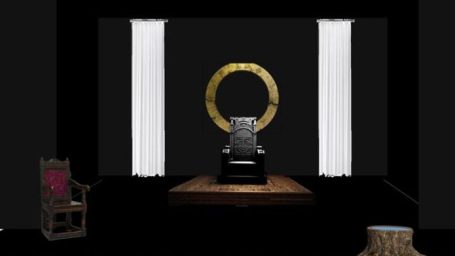
The stage is structured using Paul Avery’s three-zone staging model, which divides the performance space into distinct but interconnected areas. This clear spatial organisation helps the audience immediately understand shifts in location and tone, even without elaborate scenery.
1. Central Upstage Zone – The Throne
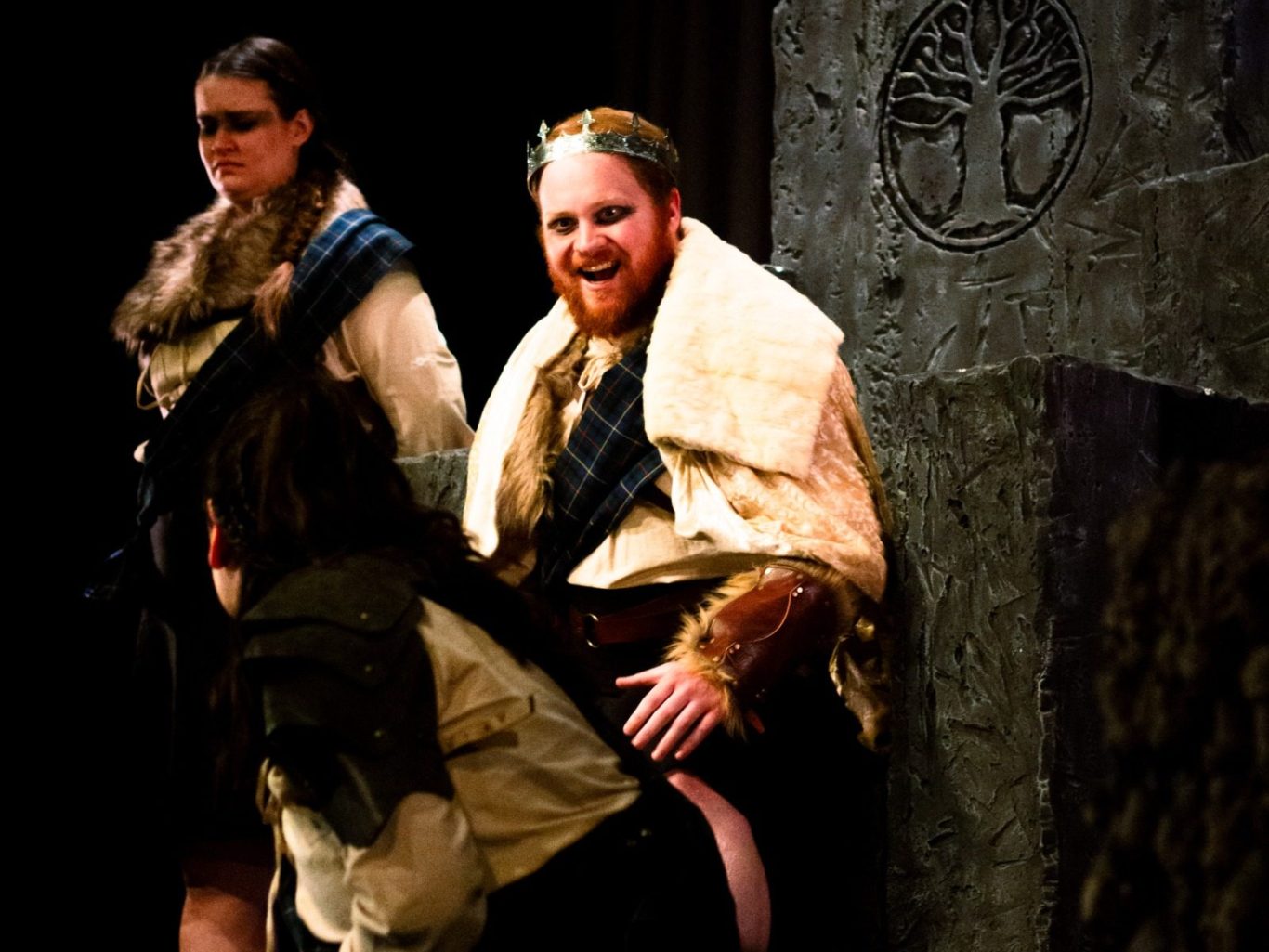
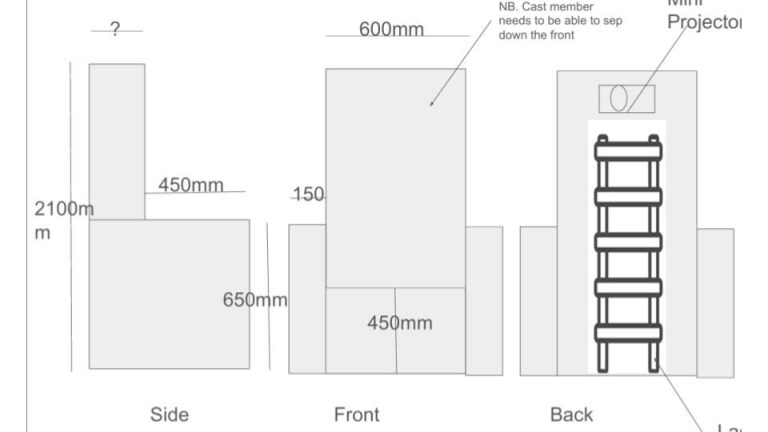
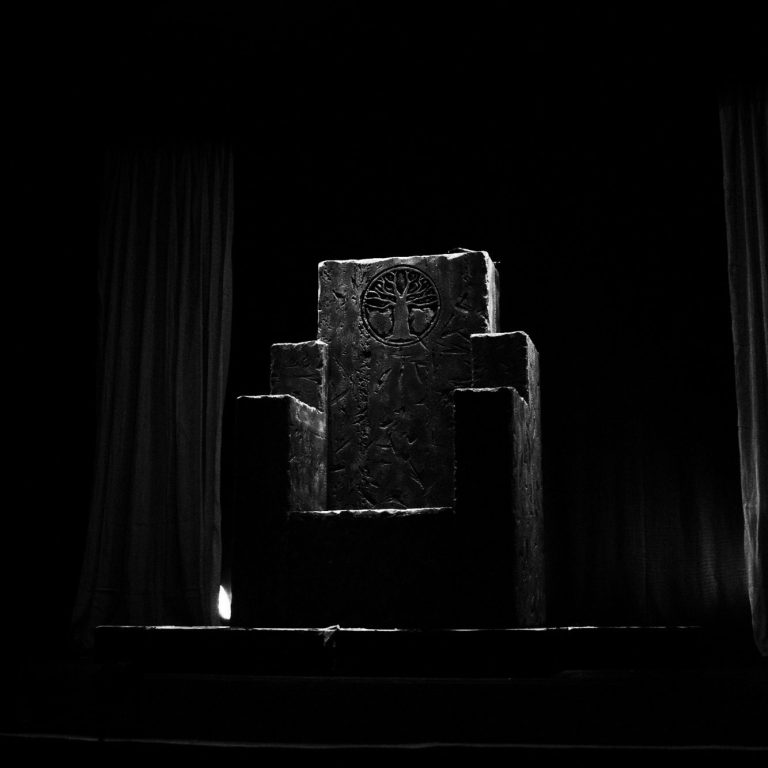
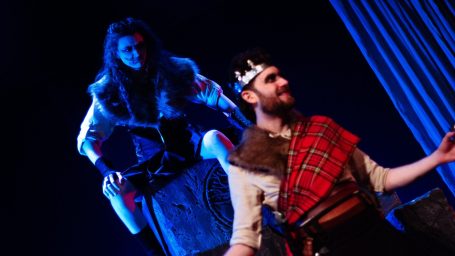
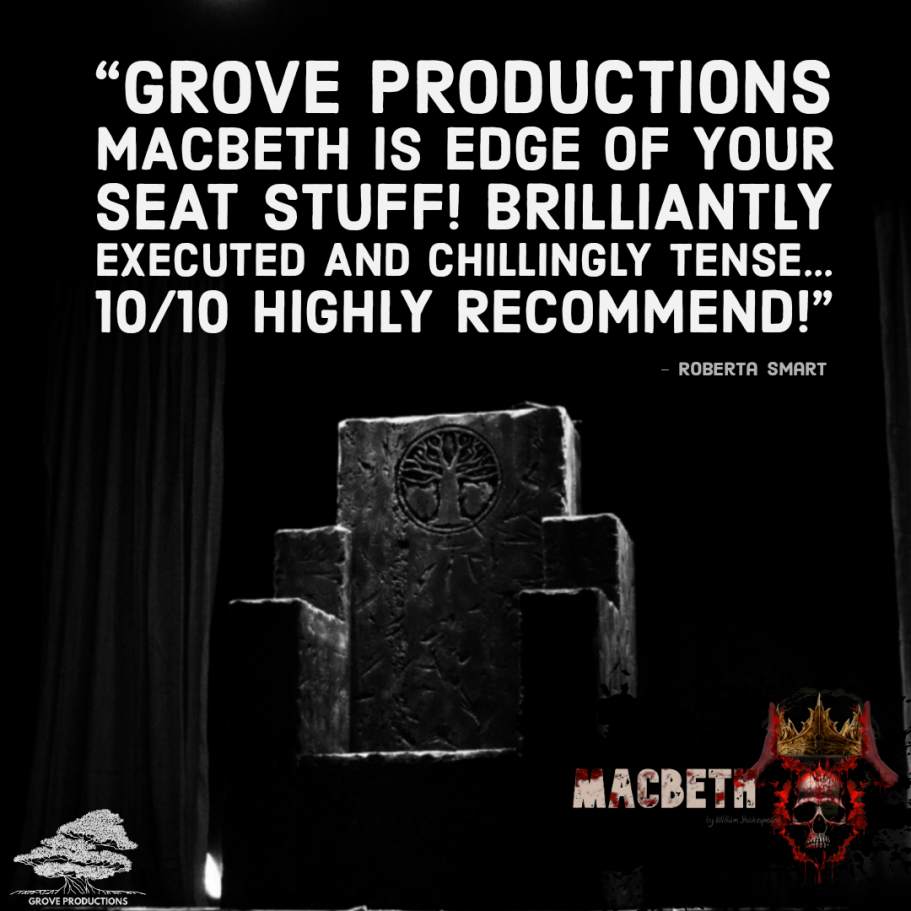
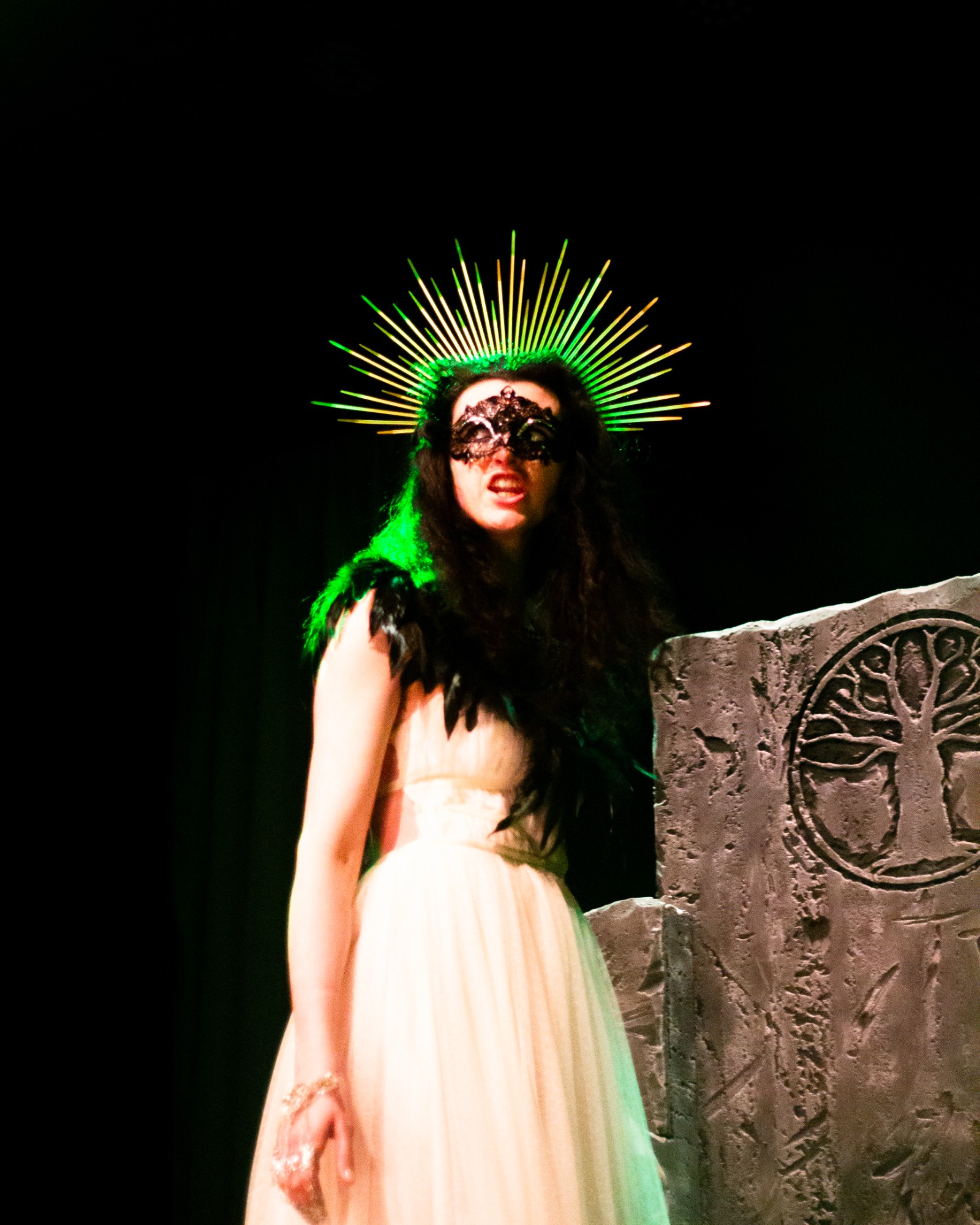
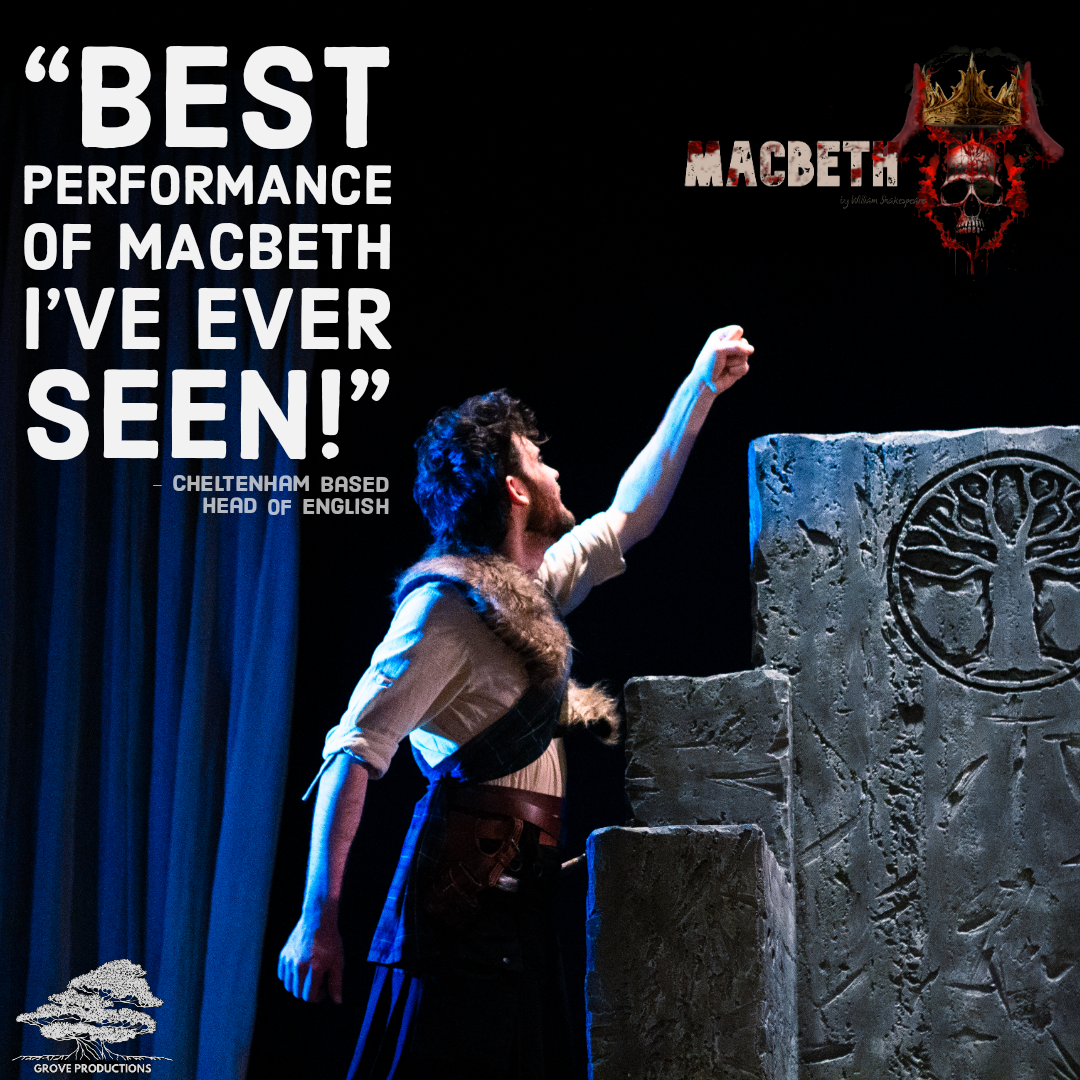
The central upstage area is dominated by a large stone-like throne, inspired by medieval Scottish design. It symbolises authority, permanence, and tradition. Always visible, it represents the play’s core theme of power. Characters fight for it and are destroyed by it, making it a constant symbol of ambition.
2. Downstage Left – Nature and the Supernatural
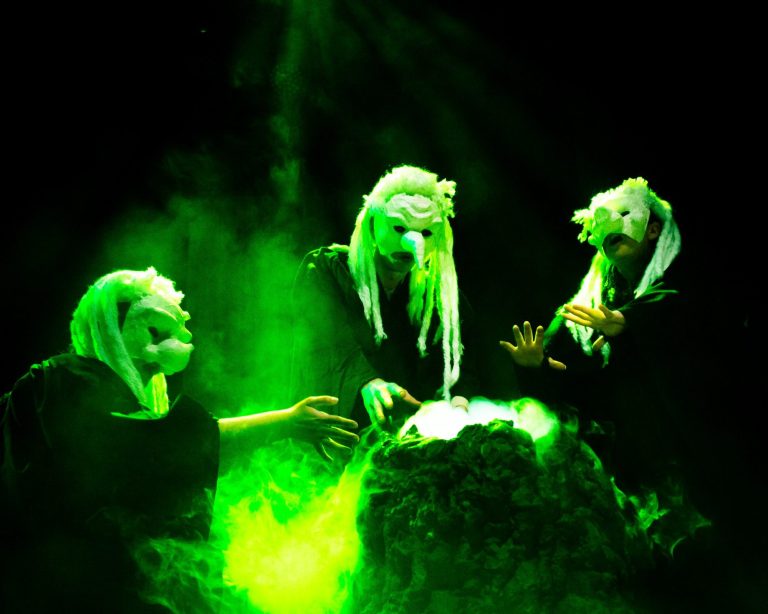
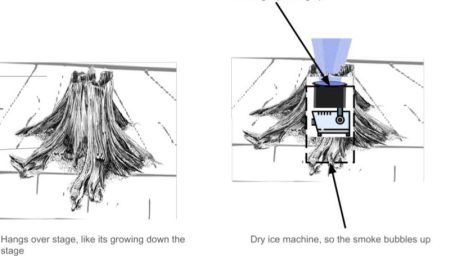
Downstage left is dominated by a tree stump that transforms into the witches’ bubbling green cauldron. It remains onstage, symbolising both nature and the supernatural. Used for outdoor scenes, it highlights the corruption of the natural order and suggests the witches’ constant, lingering influence.
3. Downstage Right – Interior and Intimacy
Downstage right represents interior, intimate spaces. Simple chairs and a table are moved by actors, reinforcing the minimalist style. A permanent wash bowl is used in the hand-washing scenes, symbolising guilt. This smaller area contrasts with the throne, highlighting private conscience and psychological collapse.
Overall Impact
The minimalist staging suits varied venues, allows quick touring setup, and maintains continuous pacing without blackouts. Each zone is symbolic: the throne represents ambition and power, the stump/cauldron nature and the supernatural, and the interior space guilt and conscience. Together, they create clear, focused visual storytelling.
Lighting and Sound
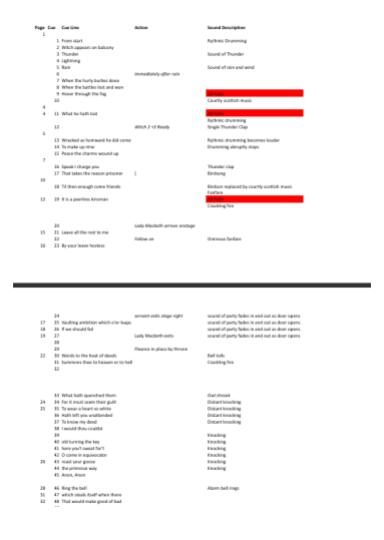
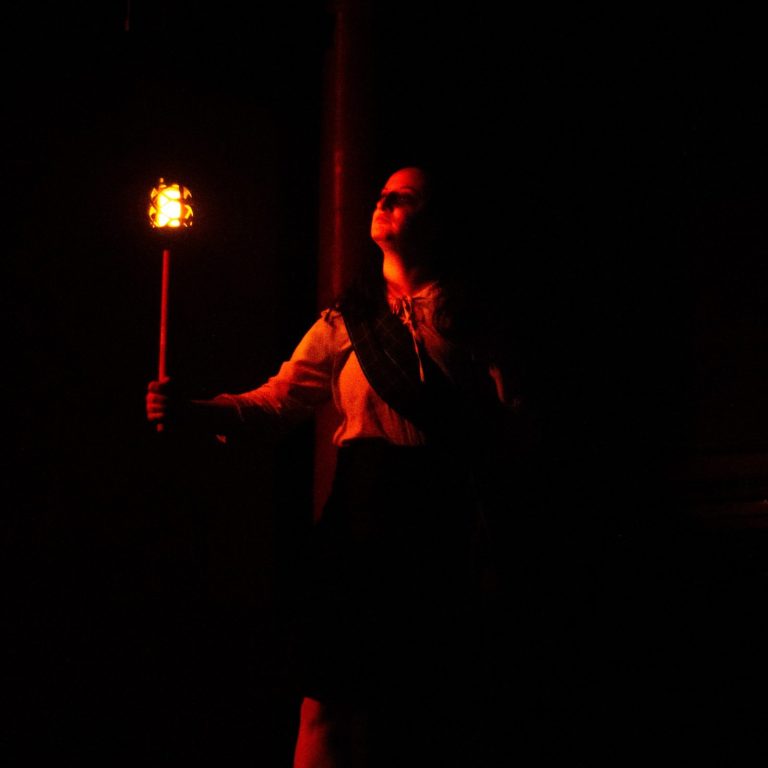
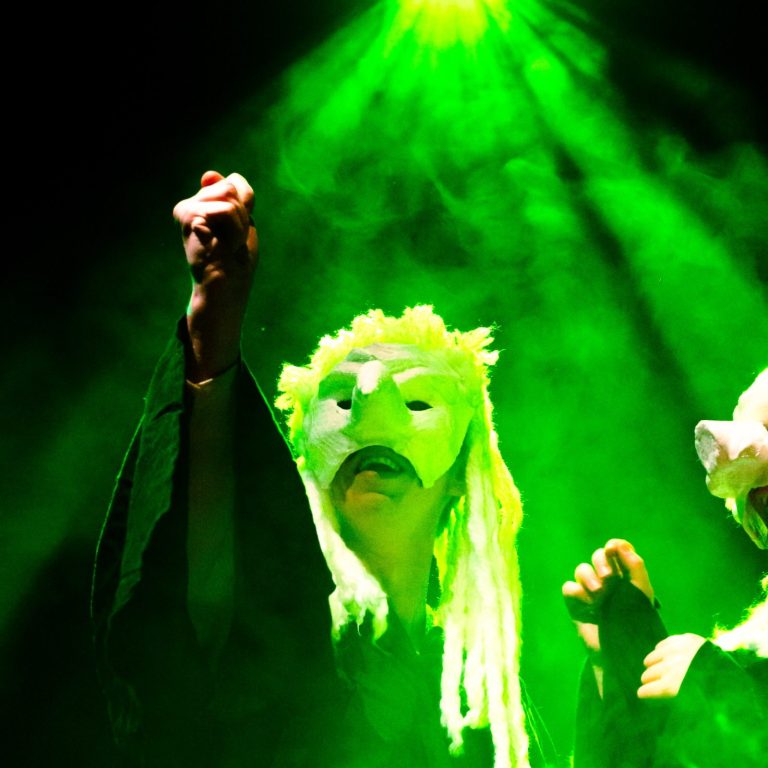
The lighting design was built around three key principles. Firstly, each zone of the stage had its own visual identity: the moors were rendered in eerie green tones, the throne room appeared large and austere, and the internal spaces felt warmer and more intimate. Secondly, key characters—particularly Macbeth and Macduff/Malcolm—were supported by distinct lighting motifs that reinforced their journeys. Finally, the overall design reflected the play’s trajectory: beginning in brightness, gradually descending into darkness, and culminating in a burning castle that symbolically purged Macbeth’s evil before returning to a sense of clarity and light. I collaborated closely with a lighting designer to realise this vision.
Costumes
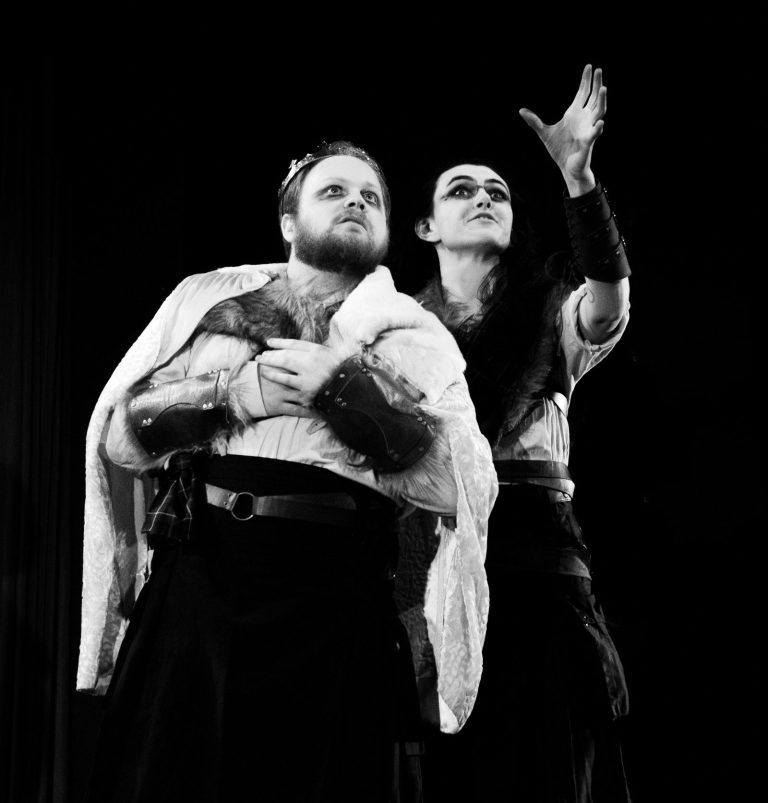
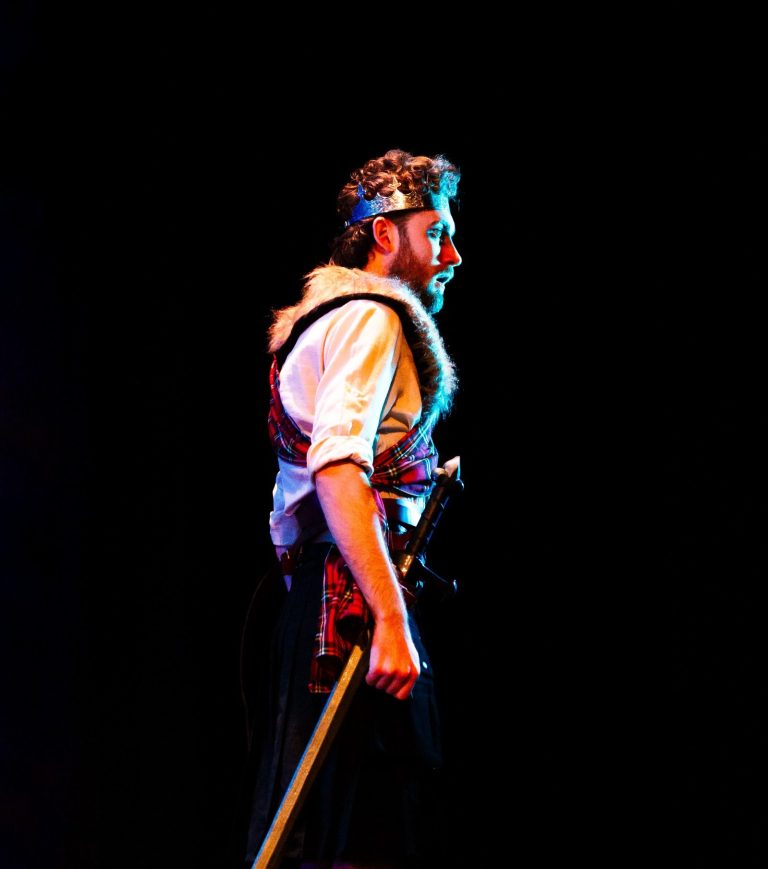
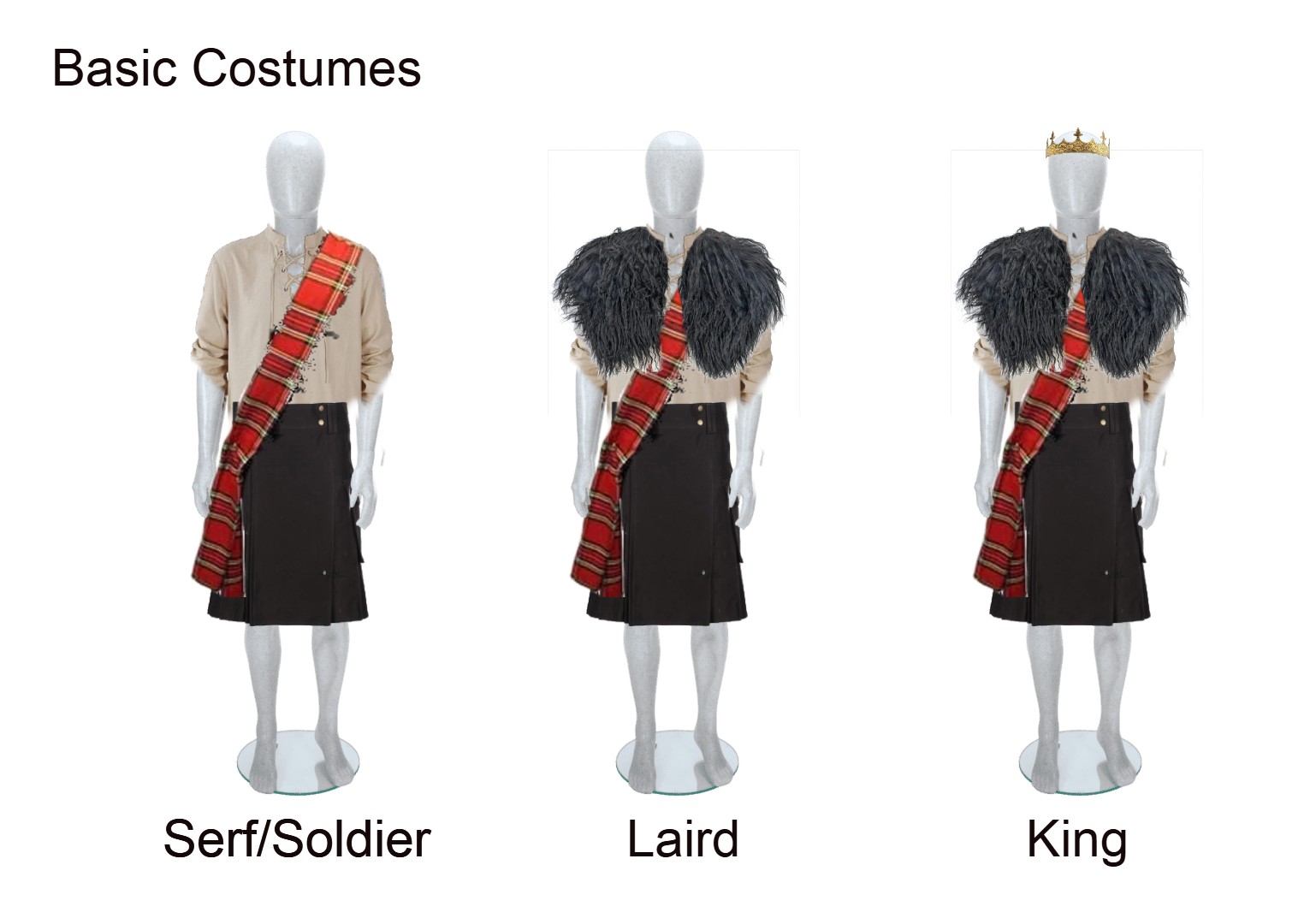
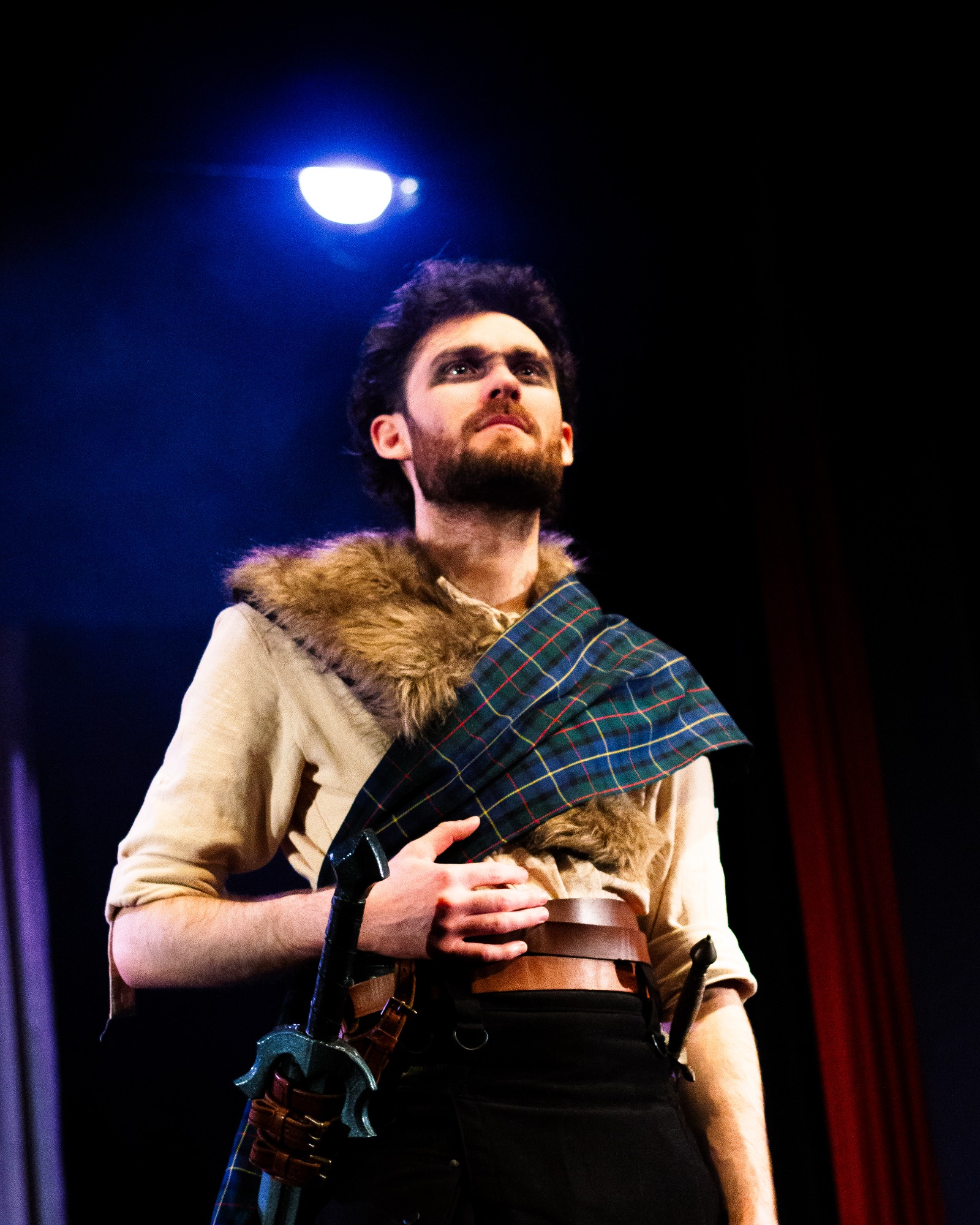
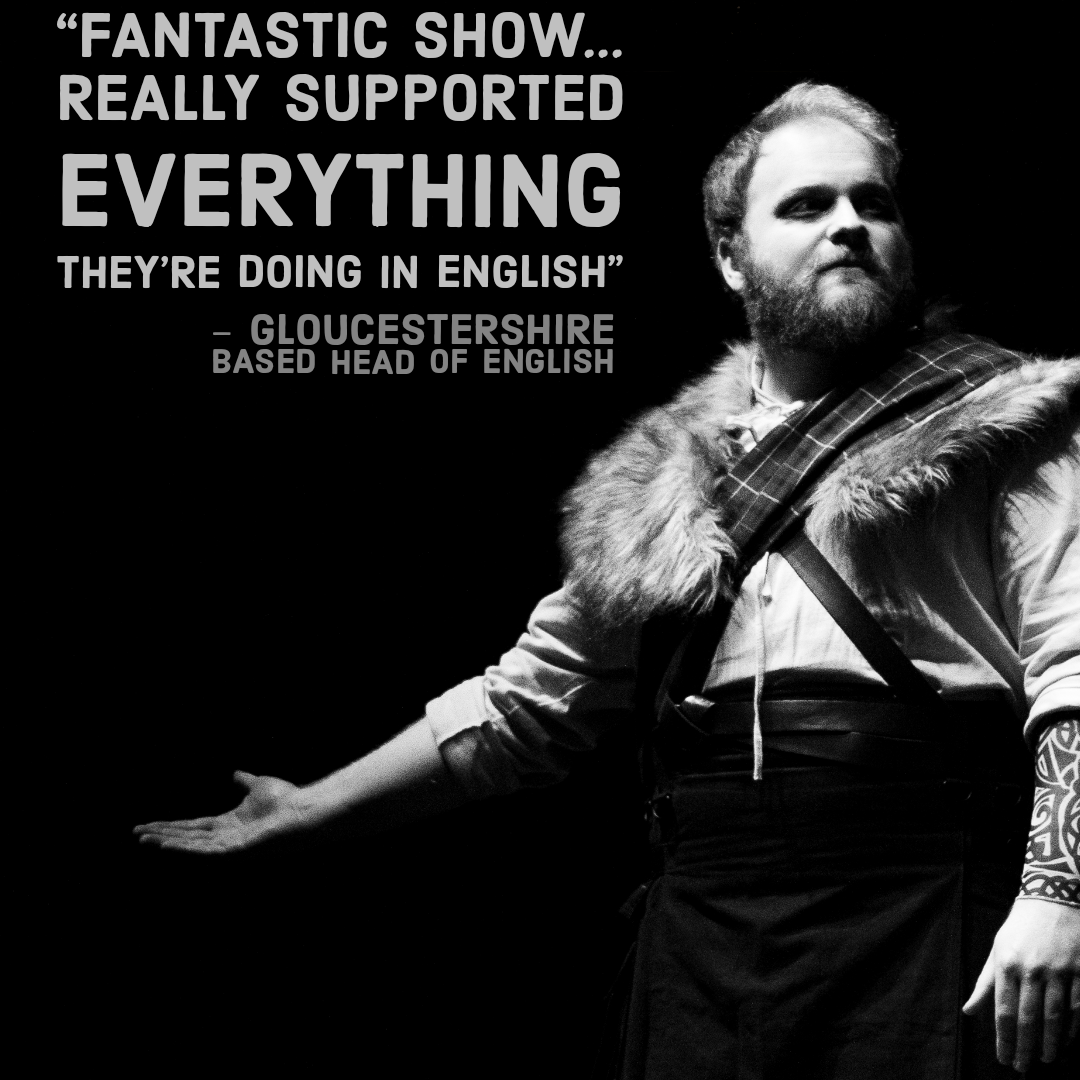
The costume design for this production of Macbeth is intentionally simple, symbolic, and practical. Because the cast will be multi-rolling, costumes must allow for quick changes while still clearly communicating character, status, and shifting political power. The foundation of the design is a shared base costume that unifies the ensemble and reflects the Scottish setting: every performer will wear a black kilt, a loose cheesecloth shirt, and a tartan sash. This neutral base ensures speed and efficiency backstage while also creating a visually cohesive world on stage.
Base Costume
The black kilt grounds the production in a traditional Scottish aesthetic while remaining neutral enough to support multiple roles. The cheesecloth shirt provides a rough, textured, almost battle-worn quality that reflects the harsh, violent world of the play. The tartan sash is the key interchangeable element. It is lightweight, easy to remove and replace, and becomes the primary visual marker of allegiance and political change throughout the production.
Status Indicators
Status distinctions are deliberately minimal but bold:
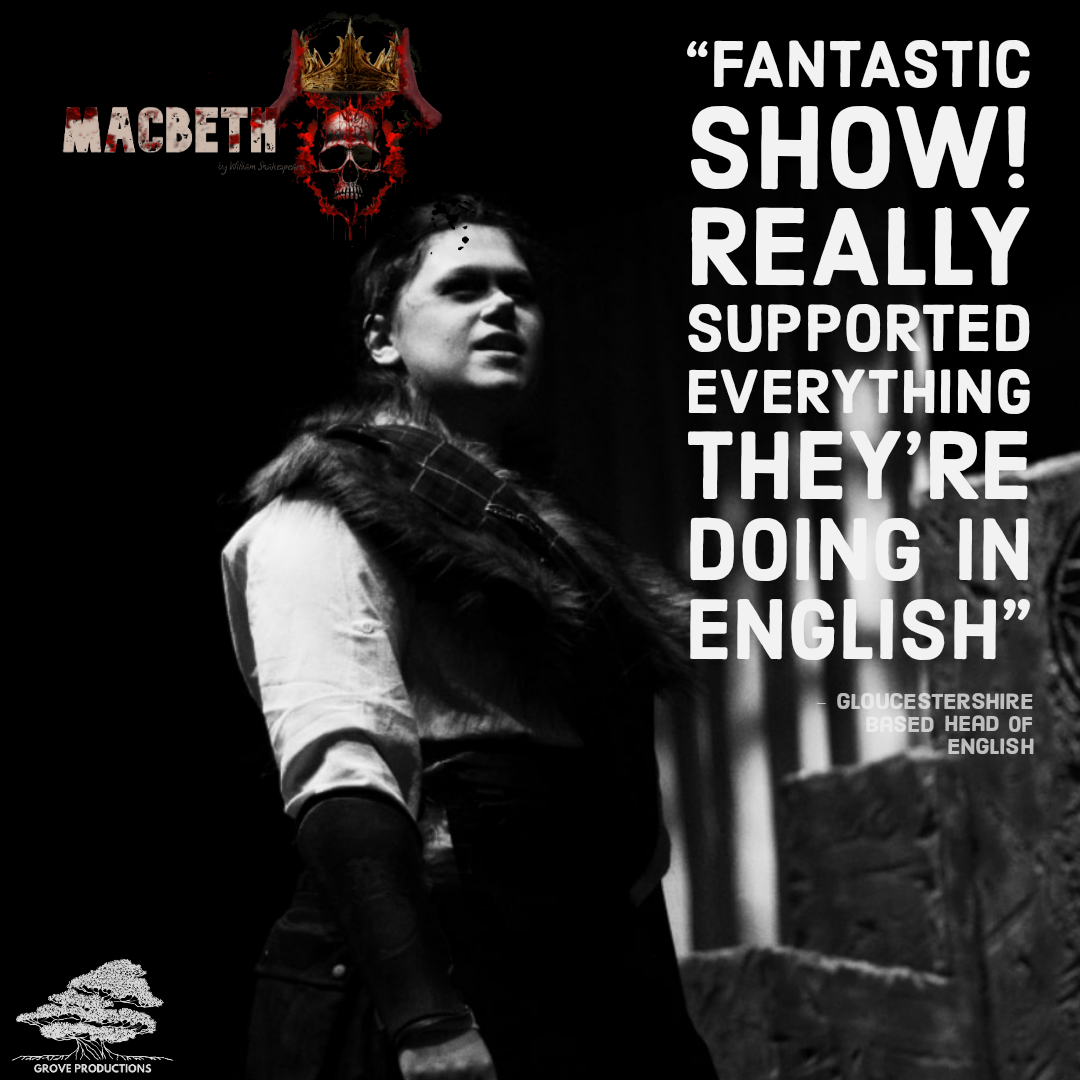
- Lairds will wear a black bearskin stole. The bearskin immediately elevates them visually, conveying authority, land ownership, and rank without requiring a full costume change.
- Kings will wear the crown. The crown functions as the ultimate symbol of power and legitimacy. It is simple, unmistakable, and instantly communicates who holds the throne at any given moment.
These additions allow actors to transition between roles quickly while maintaining clarity for the audience.
Symbolism of Colour: Blue and Red
Colour plays a central symbolic role in the production. The tartan sash is not just decorative — it represents loyalty, morality, and the shifting balance of power.
Initially, the ensemble will wear blue tartan, symbolising order, loyalty, and stability under King Duncan’s rule. Blue conveys calm authority and legitimate governance.
Malcolm and Duncan’s tartan is conceptually linked to the House of Stuart and therefore associated with red. However, red is more thematically powerful when assigned to Macbeth. Red is strongly associated with blood, violence, guilt, and death — all central motifs in the play. For this reason, Macbeth’s tartan will ultimately be red.
Visual Storytelling Through Tartan Changes
The evolution of tartan colour across the production reflects the moral and political corruption spreading through Scotland:
- At the beginning – Everyone wears blue tartan, representing unity and lawful rule under Duncan.
- As Macbeth seizes power – The tartans gradually change from blue to red as characters align themselves with Macbeth’s violent regime. This visual shift shows how the country becomes stained by blood and complicit in tyranny.
- When Malcolm raises his army – The tartan shifts back to blue among the rebels. Order and rightful leadership begin to reassert themselves. At this point, everyone except Macbeth returns to blue.
- Final image – Macbeth stands alone in red. The red tartan isolates him visually and symbolically. He is the embodiment of bloodshed and corruption, cut off from the restored order of Scotland.
This gradual colour transformation creates a powerful visual metaphor for the play’s central themes: ambition, corruption, legitimacy, and restoration.
Practical and Thematic Strength
This design balances practicality and symbolism:
- Quick changes are enabled by a shared base costume.
- Status is conveyed through simple, easily removable additions.
- Political shifts are shown clearly through colour.
- The audience can track loyalty and power dynamics instantly.
- The final stage image reinforces Macbeth’s isolation and downfall.
Overall, the costume design becomes an active storytelling device rather than simple decoration. Through minimal but meaningful adjustments — especially the shifting tartan colours — the production visually charts Scotland’s journey from order to chaos and back again, with Macbeth permanently marked in red as the man who brought blood into the nation.
Casting
As Macbeth, like many classical texts, features a predominance of white male characters, I was committed to ensuring that the student audience could see themselves reflected on stage. To achieve this, I adopted a blind casting approach, selecting actors based solely on their ability to embody the character rather than their gender, ethnicity, or background. This approach promoted inclusivity while maintaining artistic integrity, allowing for a more diverse and representative cast. It also encouraged audiences to engage with the characters beyond traditional expectations, reinforcing the universality and relevance of the play.
In addition, all performers—aside from Macbeth—were cast in multiple roles throughout the production. This multi-roling approach not only maximised the use of a smaller cast but also highlighted the thematic interconnectedness of the play’s characters and events. By having actors shift between roles, the production emphasised the fluidity of identity and power within the narrative, mirroring the instability at the heart of the story. It also encouraged the audience to focus on the actors’ physicality and performance choices rather than fixed character identities, deepening their engagement with the text. Furthermore, multi-roling provided each performer with a broader creative challenge, fostering versatility and ensuring that more students had the opportunity to take on significant and varied parts within the production.